
Wooden Pallet Production Line
Wooden Pallet Production Line
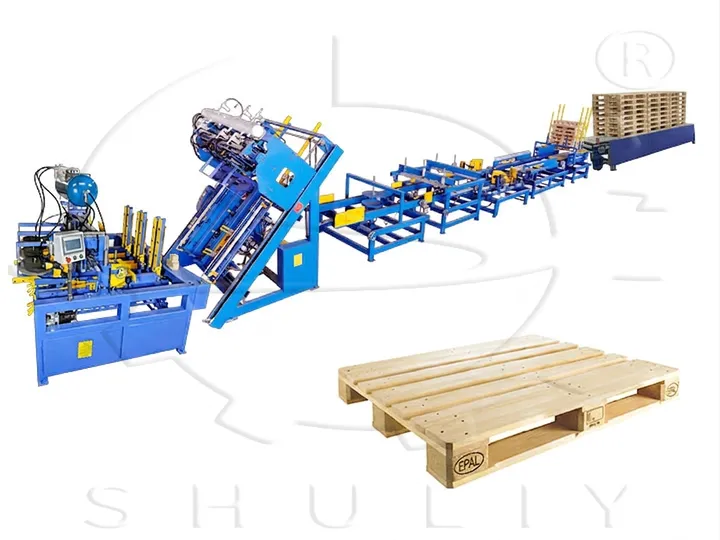
A wooden pallet production line is an integrated manufacturing system engineered to produce certified EPAL Euro pallets from solid timber. This complete pallet manufacturing system transforms raw pine or spruce boards into finished four-way entry pallets that meet European standards for logistics, warehousing, and international shipping. Depending on configuration, the line can output 800–1,200 EPAL-certified units per shift.
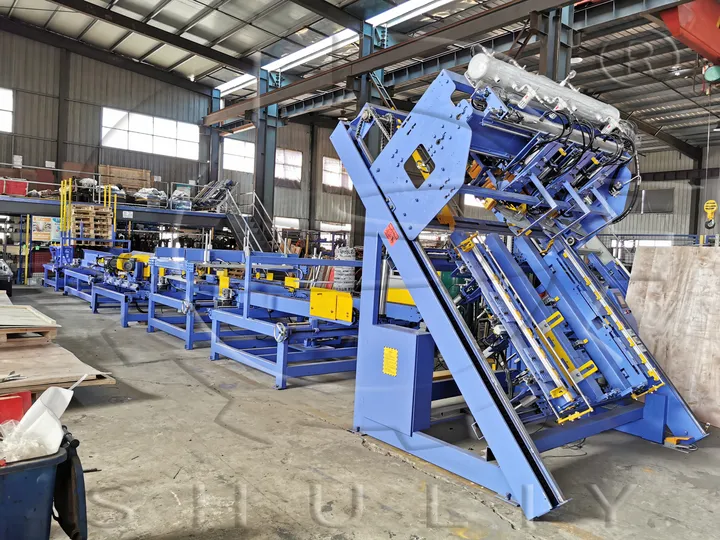
Unlike compressed pallet plants that rely on sawdust and synthetic binders, this solid wood pallet assembly line uses genuine timber construction. The resulting pallets deliver superior dynamic load capacity (up to 2,000 kg) and static stacking strength (up to 6,000 kg), making them the preferred choice for heavy-duty supply chains across Europe, the Middle East, and Africa.
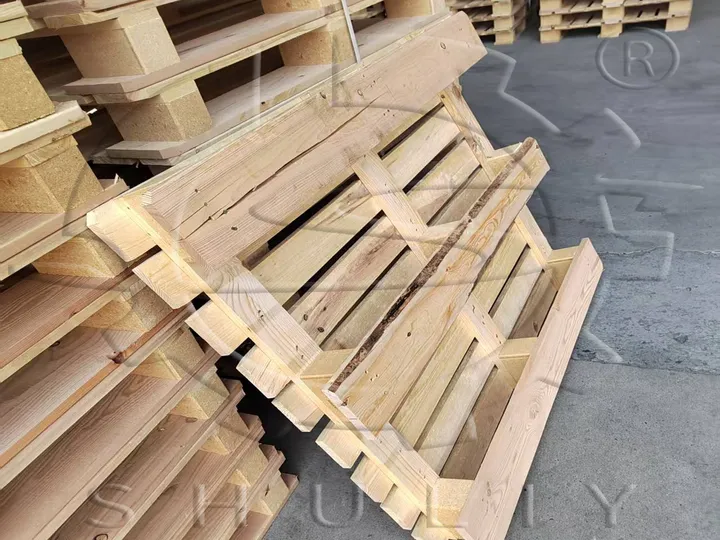
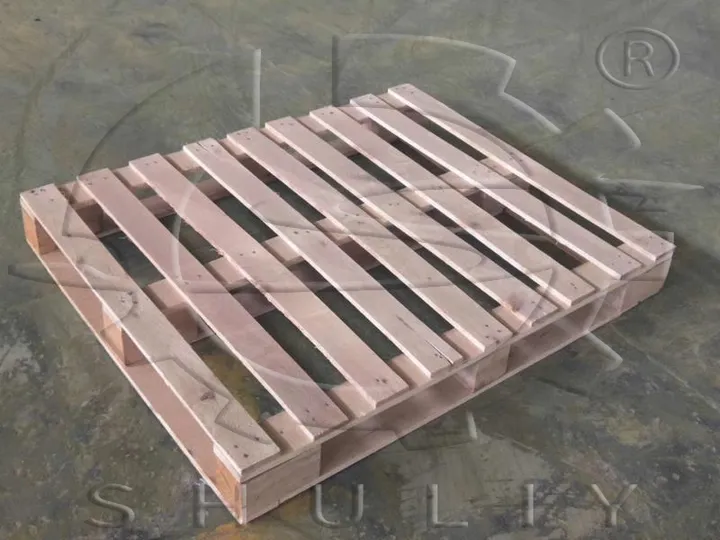
Shuliy Machinery has configured and commissioned timber pallet production systems in over 30 countries. Our engineers understand the tolerances, fastening patterns, and ISPM-15 heat-treatment requirements that determine whether a pallet earns EPAL certification or gets rejected at the port.
EPAL Pallet Specifications Produced by This Line
The Euro pallet manufacturing line is calibrated to produce three mainstream EPAL formats. Each specification uses solid pine or spruce lumber to ensure consistent grain structure and load-bearing integrity.
| Model | Dimensions (mm) | Struktur | Dynamic Load | Static Load | Typical Markets |
|---|---|---|---|---|---|
| EUR-1 | 1200 × 800 × 144 | 9 Blocks 3 Beams 7 Boards | 1,500–2,000 kg | 4,000–6,000 kg | Universal; highest demand across Europe |
| EUR-2 | 1200 × 1000 × 144 | 9 Blocks 3 Beams 7 Boards | 1,500–2,000 kg | 4,000–6,000 kg | UK, Netherlands, Finland warehousing |
| Half-size | 800 × 600 × 144 | 6 Blocks 2 Beams 5 Boards | 800–1,000 kg | 2,000–3,000 kg | Retail distribution and parcel logistics |
- Structural variants: The line can assemble both three-runner Dan perimeter-base configurations by adjusting the block placement and nailing sequences.
- Certification markings: Every pallet receives EPAL branding, EUR stamping, and IPPC/ISPM-15 heat-treatment identifiers embossed on the side stringers—mandatory for cross-border shipment within the Eurozone and beyond.
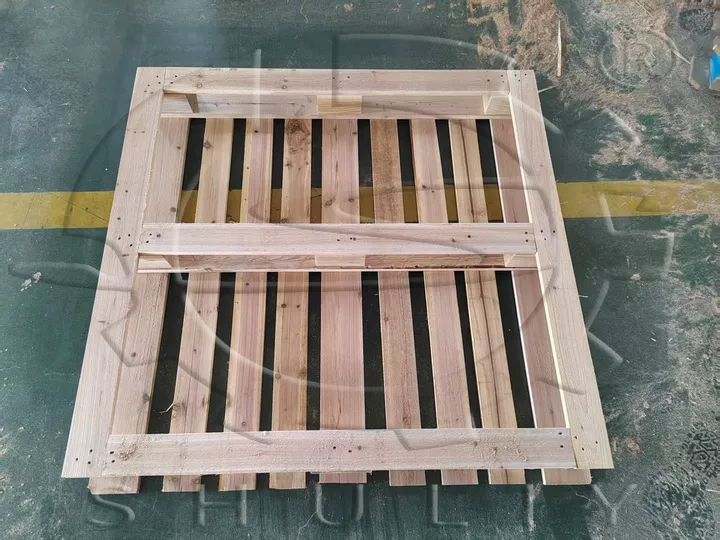
What Is the Complete Production Workflow of a Wooden Pallet Production Line?
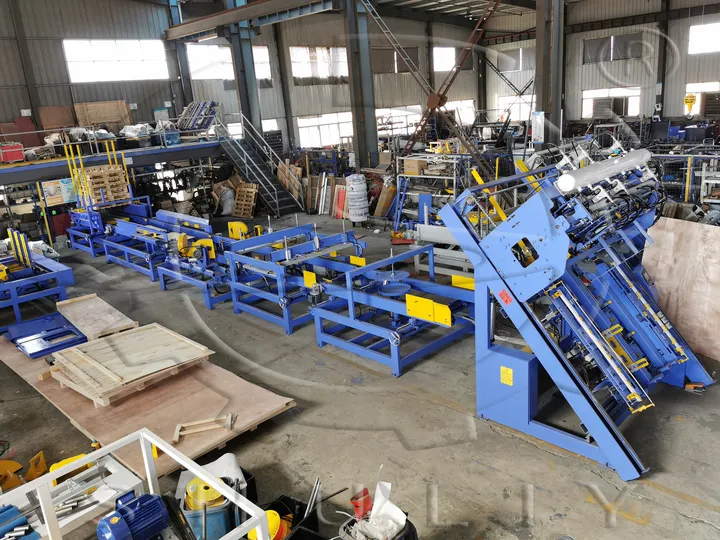
The wooden pallet assembly system follows a linear process from raw board to stacked finished goods. Below is the standard workflow configured for a mid-capacity EPAL facility.
| Langkah | Station | Fungsi |
|---|---|---|
| 1 | Raw Material Staging | Solid timber boards inspected, sorted, and queued for cutting |
| 2 | CNC Cut-off Saw | Boards cut to precise lengths for deck boards, stringers, and blocks |
| 3 | Block Preparation | Timber blocks cut, chamfered, and pre-drilled for nailing |
| 4 | Pallet Leg Assembly (Block Nailer) | Blocks fastened to bottom stringers to form the base frame |
| 5 | Main Nailing Machine | Top deck boards nailed to the base; mixed-length fasteners applied |
| 6 | Rotation Station | Pallet rotated for access to all four sides |
| 7 | Branding Press | EPAL/EUR/ISPM-15 marks embossed into side stringers |
| 8 | Corner Chamfering | 45° bevel cut on all four corners for forklift entry |
| 9 | Flip Station | Pallet inverted for uniform stacking orientation |
| 10 | Automatic Stacking | Finished pallets layered and squared for banding |
| 11 | Buffer Platform | Stacked pallets held for wrapping or direct loading |
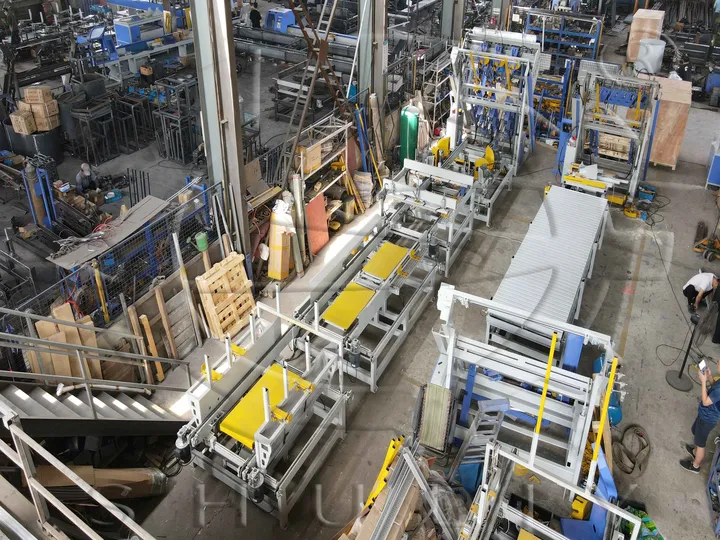
Equipment Specifications by Production Stage
The Euro pallet production line comprises nine integrated machines. Each unit is selected for compatibility with EPAL tolerance standards and continuous-duty operation.
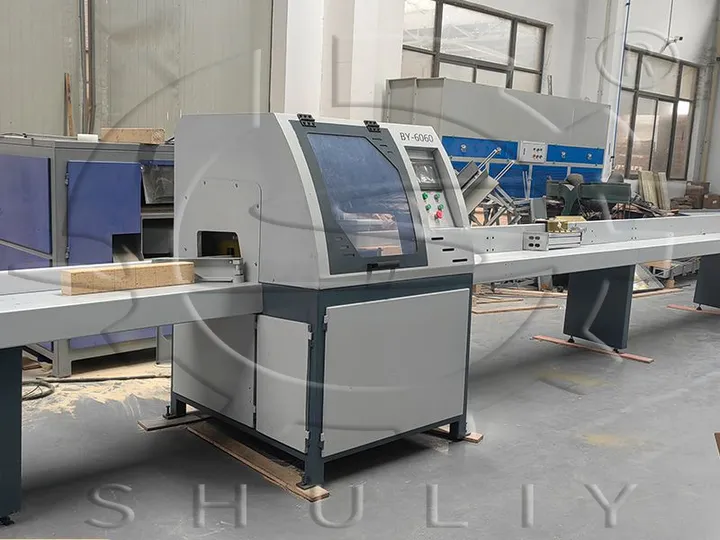
CNC Timber Cut-off Saw
| Parameter | Spesifikasi |
|---|---|
| Model | SL-CS6000 |
| Saw blade | 450 mm alloy carbide (Jintian brand) |
| Cut cycle | 2–3 seconds per board |
| Tenaga motorik | 7.5 kW, 380V 3-phase |
| Control system | Delta industrial PLC + touchscreen HMI |
| Pneumatics | Smag cylinders, Schneider relays |
| Max workpiece | 6000×200×110 mm (L×W×H) |
| Machine dimensions | 8500×1100×1300 mm |
This CNC saw delivers repeatable cut lengths for stringers, deck boards, and block stock. The touchscreen interface stores recipes for EUR-1, EUR-2, and half-size formats, reducing changeover time between orders.
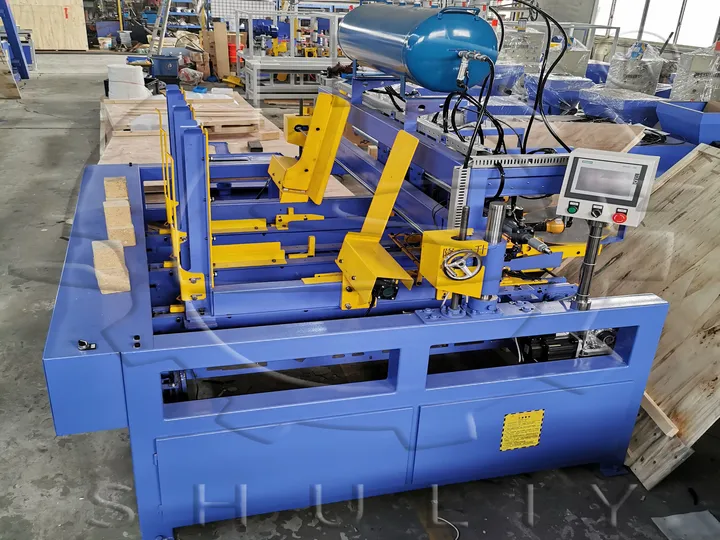
Pallet Block Nailer (Leg Pre-assembly)
| Parameter | Spesifikasi |
|---|---|
| Model | SL-BN1300 |
| Working range | 800–1300 mm |
| Nail guns | Stanley Bostitch 70 series × 3 |
| Tekanan udara | 0.8 MPa |
| Cycle time | 4–8 seconds per leg assembly |
| Drive | 1.2 kW servo motor, 220V |
| Control | Siemens PLC + touchscreen |
| Dimensi | 2400×2200×2100 mm |
The block nailer pre-assembles the nine-block base frame. Operators place stringers and blocks into the fixture; the machine drives all fasteners automatically, ensuring square geometry before transfer to the main nailing station.
EPAL Pallet Nailing Main Machine
| Parameter | Spesifikasi |
|---|---|
| Model | SL-PN1300 |
| Working range | 800×800 to 1300×1300 mm |
| Short nail guns | 58 mm Bostitch × 3 (open deck areas) |
| Long nail guns | 80 mm Bostitch × 3 (over block positions) |
| Tekanan udara | 0.8 MPa |
| Cycle time | ~7 seconds per pallet |
| Drive | 1.5 kW servo motor, 380V |
| Control | Delta PLC + touchscreen |
| Stacking | Hydraulic/pneumatic auto discharge |
| Dimensi | 2300×2500×2500 mm |
The main nailing machine completes the pallet by fastening top deck boards to the pre-assembled base. Mixed fastener lengths ensure pull-through resistance at block locations while minimizing material stress in open spans.
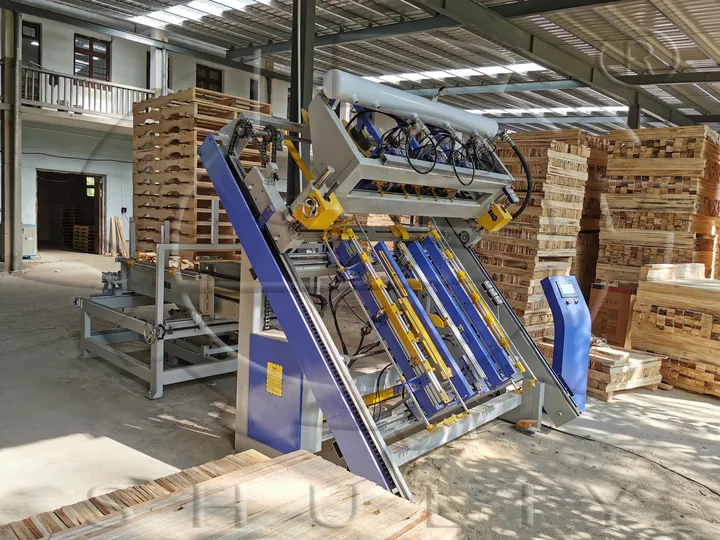
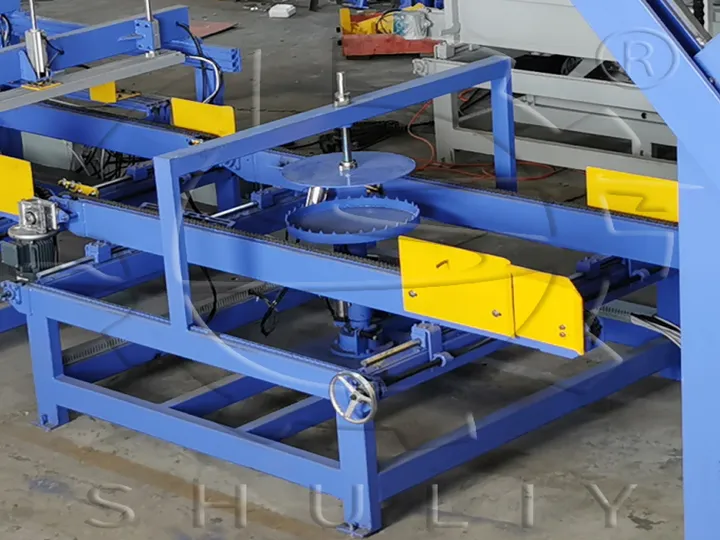
Pallet Rotary Machine
| Parameter | Spesifikasi |
|---|---|
| Model | SL-PR2500 |
| Dimensi | 2500×2100×1600 mm |
| Berat | 500 kg |
| Control | Integrated touchscreen, automatic infeed |
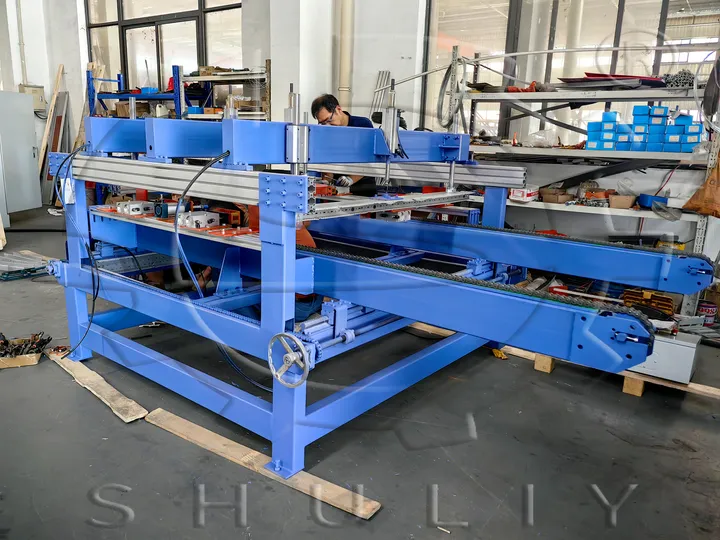
EPAL Pallet Branding Machine
| Parameter | Spesifikasi |
|---|---|
| Model | SL-BP1300 |
| Working range | 800–1300 mm |
| Branding heads | 4–6 stations (custom dies per client) |
| Die material | Hardened tool steel |
| Drive | Pneumatic, 0.8 MPa |
| Sensing | Proximity sensors for pallet presence |
| Motor | 1.5 kW, 380V |
| Control | Line-integrated PLC, touchscreen |
| Dimensi | 2300×1900×1500 mm |
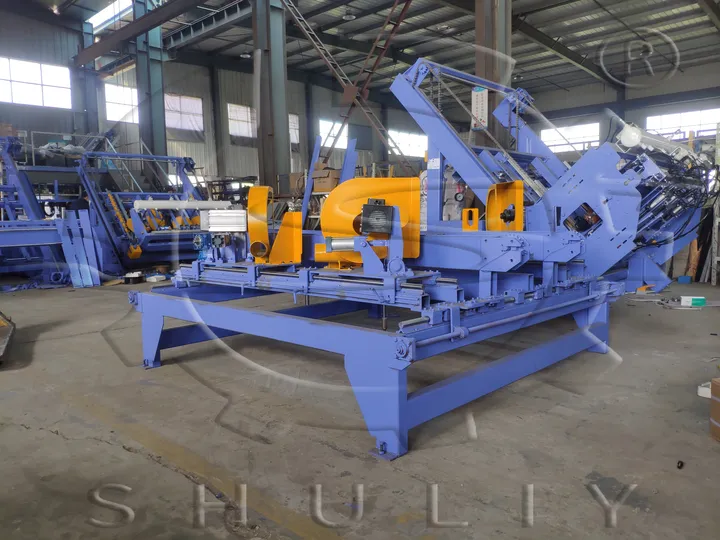
Pallet Corner Cutter
| Parameter | Spesifikasi |
|---|---|
| Model | SL-CC1300 |
| Working range | 800–1300 mm |
| Saw blade | 355 mm alloy, 2900 RPM |
| Tekanan udara | 0.8 MPa |
| Tenaga motorik | 8.8 kW, 380V |
| Control | Line-integrated PLC, touchscreen |
| Operation | Automatic infeed, four-corner simultaneous chamfer |
| Dimensi | 2700×2300×1200 mm |
Cuts 45° bevels on all four corners to enable smooth forklift entry from any direction and prevent edge splintering during handling.
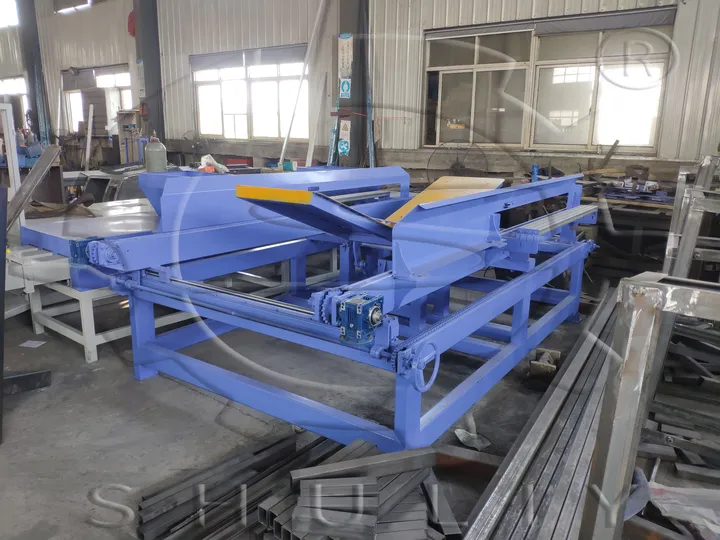
Pallet Flipper
| Parameter | Spesifikasi |
|---|---|
| Model | SL-PF3300 |
| Working range | 800–1300 mm |
| Tekanan udara | 0.8 MPa |
| Cycle time | 4–8 seconds per flip |
| Motors | 1.5 kW + 0.75 kW × 2, 380V |
| Control | Line-integrated, automatic continuous feed |
| Dimensi | 3300×2000×1300 mm |
Automatic Palletizer
| Parameter | Spesifikasi |
|---|---|
| Model | SL-PS2900 |
| Working range | 800–1300 mm |
| Tekanan udara | 0.8 MPa |
| Cycle time | 4–8 seconds per layer |
| Motor | 1.5 kW, 220V |
| Control | Line-integrated, automatic layer forming |
| Dimensi | 2900×2100×1760 mm |
Layers finished pallets into uniform stacks (typically 10–15 units high) for banding and fork-truck removal.
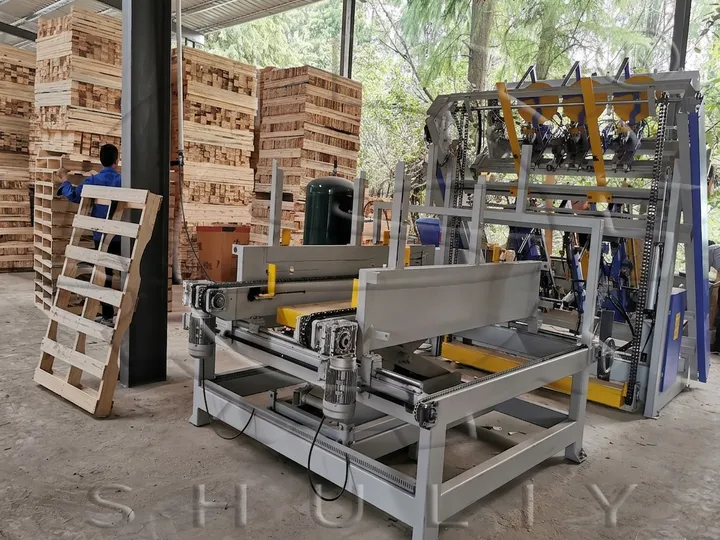
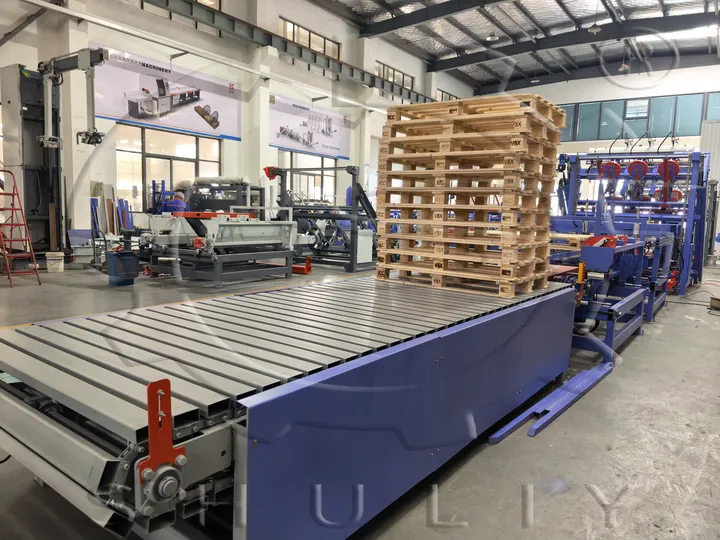
Finished Goods Buffer Platform
| Parameter | Spesifikasi |
|---|---|
| Model | SL-BP4000 |
| Platform length | 4000 mm |
| Working range | 800–1300 mm pallets |
| Drive | 0.75 kW motor |
| Fungsi | Temporary accumulation before wrapping or dispatch |
Facility Requirements and Staffing
| Barang | Spesifikasi |
|---|---|
| Total line length | ~15 meters |
| Line width | 2.5–3 meters |
| Maximum machine height | 3 meters |
| Recommended ceiling height | 4.5+ meters |
| Floor loading | Reinforced concrete, 5 t/m² minimum |
| Electrical supply | 380V 3-phase, 60–80 kW total |
| Compressed air | 0.8 MPa, 500 L/min capacity |
| Staffing (automated config) | 1 operator for material loading; all other stations automatic |
| Staffing (traditional config) | Block nailing: 2 operators; all downstream stations: 1 operator |
How Does a Wooden Pallet Production Line Ensure Quality and Compliance Standards?
Every pallet produced on this solid wood pallet manufacturing line is inspected for:
- Dimensional tolerance: Length, width, and height within ±2 mm of EPAL specification
- Fastener placement: Nail patterns matching EPAL drawings; minimum 78 fasteners per EUR-1 pallet
- Corner geometry: 45° chamfer angle verified by template gauge
- Marking legibility: EPAL/EUR/ISPM-15 stamps clear and correctly positioned
- Moisture content: Timber dried to 18–22% MC before cutting to prevent warping
Equipment is fully tested and calibrated before shipment.
- Standard warranty: 12 months from commissioning.
- Delivery: two 40 HQ containers.
- Lead time: 45 days from order confirmation.
Why Choose Shuliy for Your Pallet Manufacturing System?
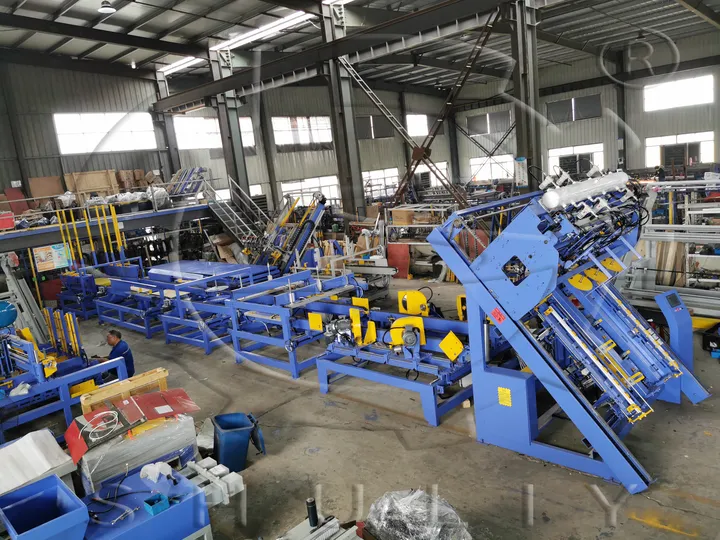
- EPAL compliance expertise: We understand the certification requirements and can advise on heat-treatment chamber integration.
- Modular expansion: Start with EUR-1 production and add EUR-2 or half-size capability later.
- Global parts network: Bostitch fasteners, Delta controls, and Siemens components are serviced locally in most regions.
- Remote diagnostics: Ethernet-enabled PLCs allow our engineers to troubleshoot from our headquarters.
FAQ
Can the production line manufacture non-standard pallet sizes?
Yes. In addition to standard EPAL pallet sizes, the production line can be customized to produce other pallet dimensions according to your market requirements. Our engineers can adjust the machine settings, fixtures, and tooling to match your desired pallet specifications.
What type of wood is recommended for pallet production?
Pine and spruce are the most commonly used materials due to their strength, availability, and compliance with EPAL standards. However, other suitable timber species can also be used, provided they meet the required moisture content and structural strength requirements.
How long does it take to change from one pallet size to another?
The changeover time depends on the pallet specification and production setup. For most standard configurations, operators can complete adjustments within a few hours by changing machine parameters and positioning fixtures.
Can the line be upgraded in the future if production demand increases?
Yes. The production line is designed with modular expansion in mind. Additional automation modules, conveying systems, stacking equipment, or higher-capacity nailing stations can be added as production requirements grow.
What is the expected service life of the equipment?
With proper maintenance and normal operating conditions, the equipment can operate reliably for more than 10 years. Regular inspection of pneumatic components, nail guns, saw blades, and electrical systems helps maximize machine lifespan.
What consumables are required during operation?
The main consumables include pallet nails, saw blades, lubrication materials, and replacement wear parts such as pneumatic seals and cutting tools. These items are readily available and have relatively low operating costs.
Can the production line operate continuously in multiple shifts?
Yes. The equipment is designed for industrial production environments and can support continuous multi-shift operation. Routine maintenance should be performed according to the recommended schedule to ensure stable long-term performance.
What training is provided after purchasing the line?
Customers receive operation manuals, maintenance guides, machine layout drawings, and technical training. Remote support and video guidance are available to help operators quickly become familiar with the production process.
How much factory space is required for raw material storage and finished pallets?
In addition to the production line itself, sufficient space should be reserved for timber storage, finished pallet stacking, forklift movement, and packaging operations. The exact area depends on production volume and inventory requirements.
Is remote technical support available after installation?
Yes. Shuliy provides lifetime technical support. Engineers can assist with troubleshooting, parameter adjustments, maintenance guidance, and production optimization through online communication and remote diagnostics when applicable.
What factors most affect pallet production costs?
The main cost factors include timber prices, nail consumption, labor costs, electricity usage, pallet specifications, and local certification requirements. Raw material costs generally account for the largest portion of overall production expenses.
Can the line be integrated with a heat-treatment system?
Yes. The production line can be connected to an ISPM-15 heat-treatment kiln or drying chamber, allowing pallets to meet international export requirements before branding and shipment.
Related Equipment
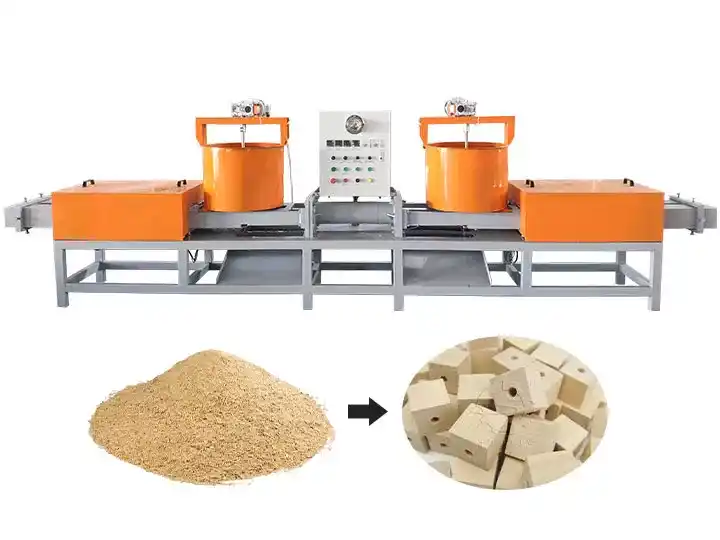
Sawdust Block Making Production Line
This integrated production line consists of crushing, drying, mixing, high-pressure pressing and cutting units, converting sawdust, wood shavings and rice husk into solid compact wood blocks. Finished blocks serve as biomass fuel, packaging support and construction raw materials for multiple industries.
Core Advantages
- Wide Raw Material Utilization: Processes diverse wood & agricultural waste, cutting waste disposal cost by over 35% and turning scraps into profitable products.
- Customizable Output: Adjustable moulds produce blocks in varied sizes, with typical line yield ranging from 1–4.5 tons per hour.
- Energy Saving & Eco-friendly: Optimized compression design lowers unit power consumption by 30% vs conventional equipment, no extra chemical binder required.
- High Product Value: Compacted blocks gain over 20% higher calorific value than loose raw sawdust, greatly cutting storage and transportation expenses.
- Low Labor Input: Fully continuous automatic workflow reduces on-site operators by 60% compared with scattered manual processing.
Produk Panas
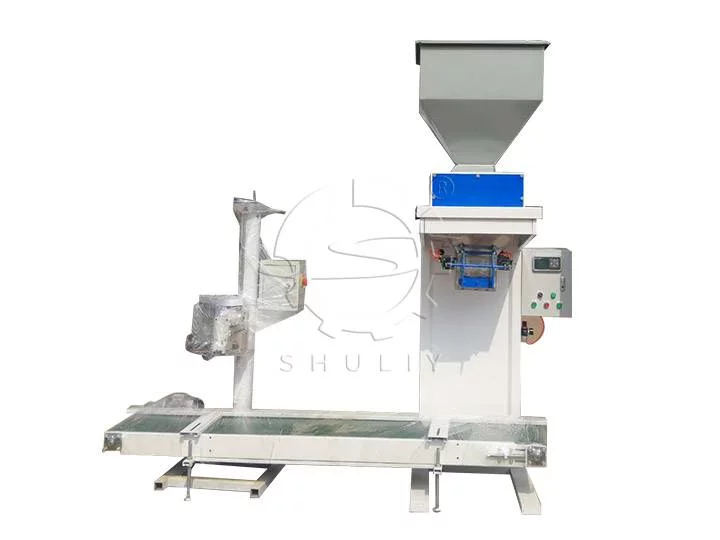
Mesin Pengemas Briket Arang untuk Arang Barbekyu
Mesin pengemasan briket arang kami, yaitu arang BBQ…
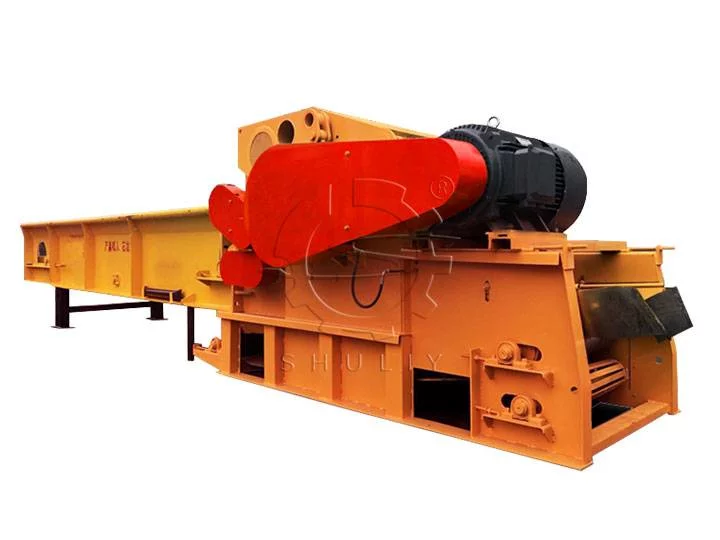
Pestle Komprehensif Kayu | Penghancur Palet Kayu
Crusher komprehensif, yang biasa disebut sebagai…
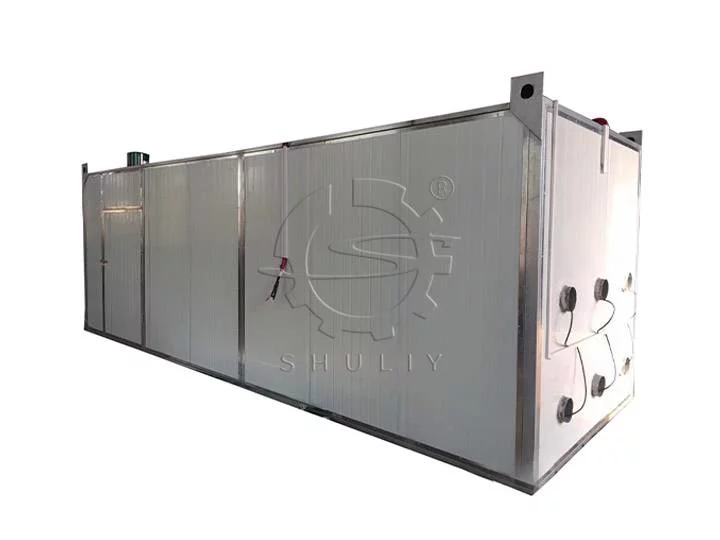
Mesin Pengering Briket Arang Kotak
Mesin pengering briket arang berbentuk kotak ini adalah sebuah…
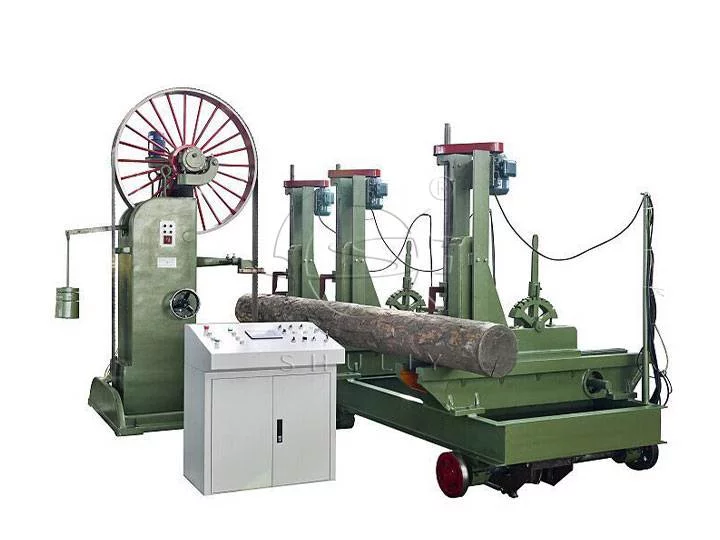
Mesin Penggergajian Kayu Portabel | Mesin Penggergajian Kayu
Mesin penggilingan gergaji kayu portabel memiliki…
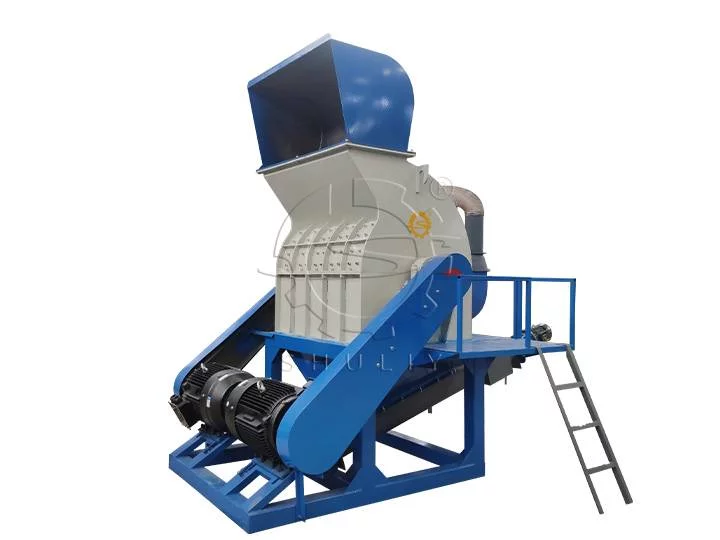
Pabrik Palu Kayu | Penghancur Pabrik Hammer
Wood Hammer Mill secara efisien menghancurkan serpihan kayu,…
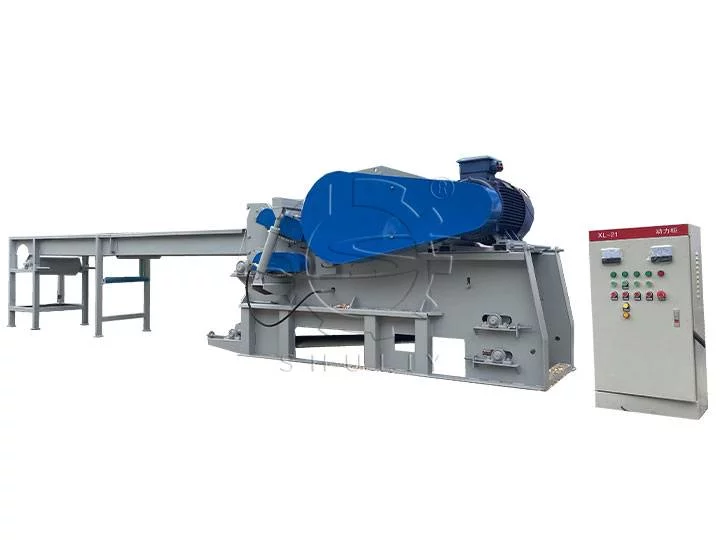
Pemotong Kayu Gaya Drum
Penghancur kayu model drum digunakan di…
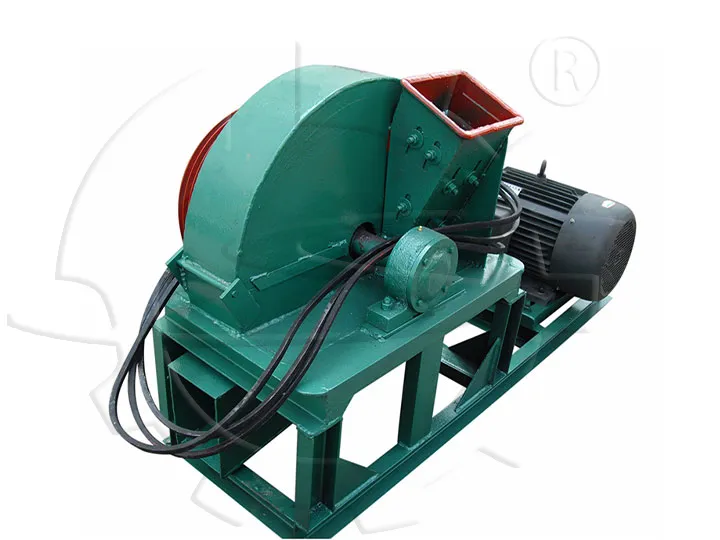
Mesin Serutan Kayu | Serutan Kayu untuk Tempat Tidur Hewan
Mesin Serutan Kayu memotong dan memproses secara efisien…
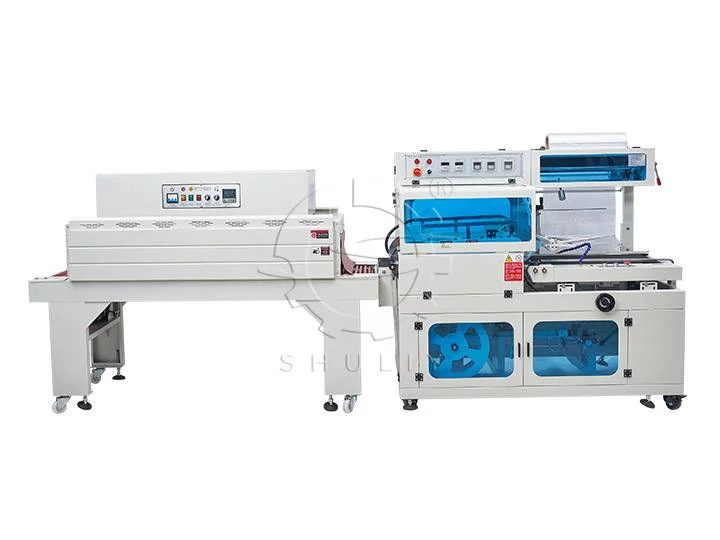
Mesin Pengemas Film Heat Shrink | Mesin Pengemas Briket Arang
Mesin pengemas film heat shrink kami, juga dikenal…
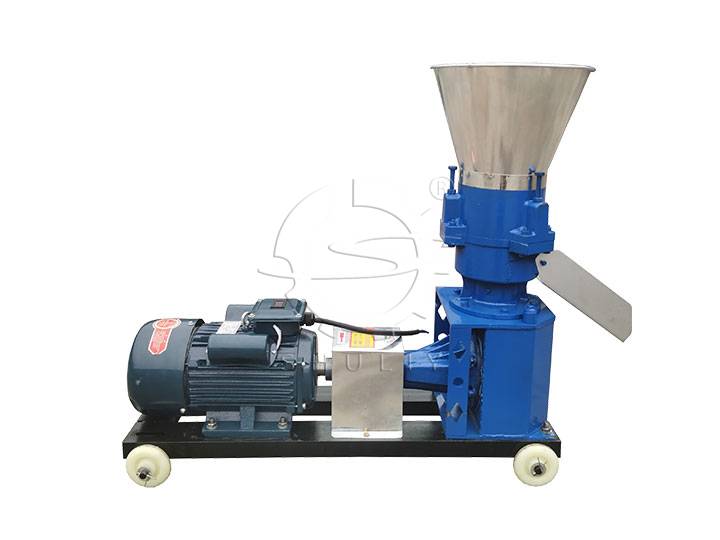
Mesin Pelet Pakan Ternak | Mesin Pabrik Pakan Pelet
Shuliy menawarkan mesin pelet pakan ternak untuk…