How to Choose the Right Shisha Charcoal Briquette Making Machine for Your Production Scale
Selecting the right เครื่องทำถ่านอัดก้อนชิชา is one of the most consequential decisions for anyone entering the hookah charcoal business. The wrong choice can lead to underutilized capacity, excessive wear, or product quality that fails to meet market expectations. Whether you are planning a small workshop or an industrial-scale export operation, the machine you invest in must align with your production targets, raw material supply, and downstream packaging workflow. In this guide, we break down the practical factors that determine which machine type and capacity tier offer the best return for your specific scale.
Start With a Clear Production Volume Target
Before comparing specifications, define your output requirement in concrete terms. Are you producing 200 kilograms per day for a local lounge supply contract, or do you need several metric tons daily to fulfill export orders to the Middle East and Southeast Asia? The answer immediately narrows your options.
- Small-scale (50–200 kg/day): A compact hydraulic press or entry-level rotary tablet press is usually sufficient. These units require minimal floor space and allow you to test product shapes and binder formulas without committing to high capital expenditure.
- Medium-scale (200–1,000 kg/day): At this tier, a rotary round shisha charcoal machine becomes economically advantageous. With outputs reaching 21,000 pieces per hour, it delivers the consistency and speed required by wholesale distributors.
- Large-scale (1,000+ kg/day): Industrial buyers typically run multiple hydraulic presses or a fully integrated shisha hookah charcoal production line that includes grinding, mixing, pressing, drying, and packing stages.
One common mistake is purchasing a machine at the upper limit of your current need without accounting for seasonal demand spikes. If your market experiences surges during Ramadan or year-end holidays, build a 20–30 percent capacity buffer into your calculation.
Match Machine Type to Your Product Specifications
Not every shisha charcoal briquette making machine produces the same final product. Your target market’s preferences for shape, size, and burn characteristics should dictate the technology you select.
Hydraulic Shisha Charcoal Press
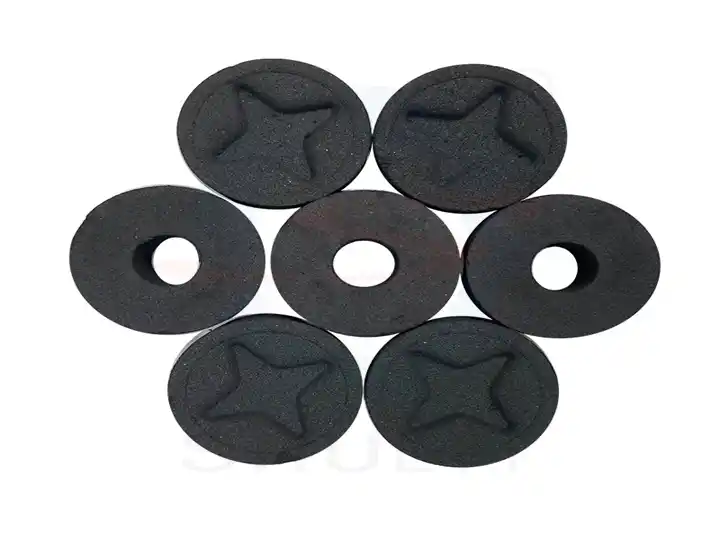
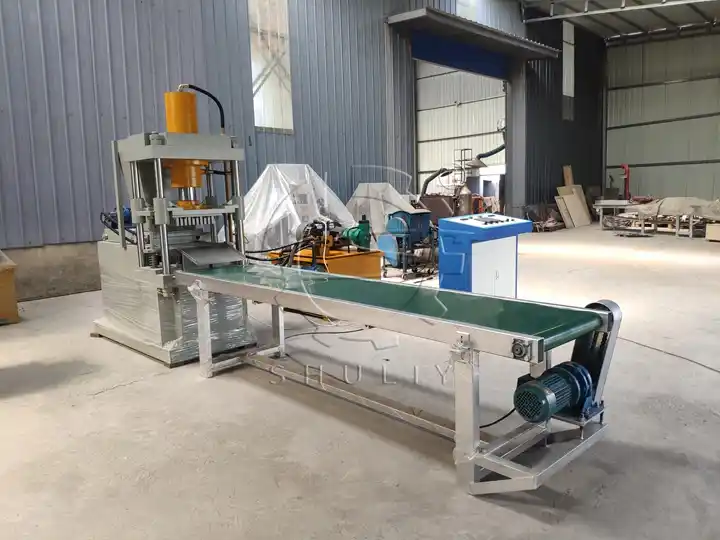
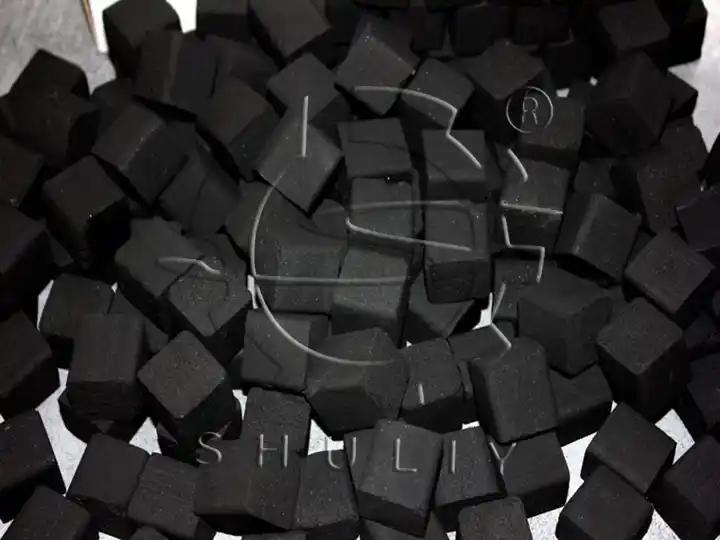
This type uses high-pressure hydraulics to compact charcoal powder into dense, hard blocks. It is the preferred choice when you need cube-shaped or large-diameter round briquettes that burn for 60–90 minutes. The SL-HS series, for example, delivers 60–80 tons of pressure and handles 42 to 44 pieces per cycle. Because the hydraulic system generates exceptional compression force, the resulting briquettes resist cracking during transport—an important consideration for export shipments.
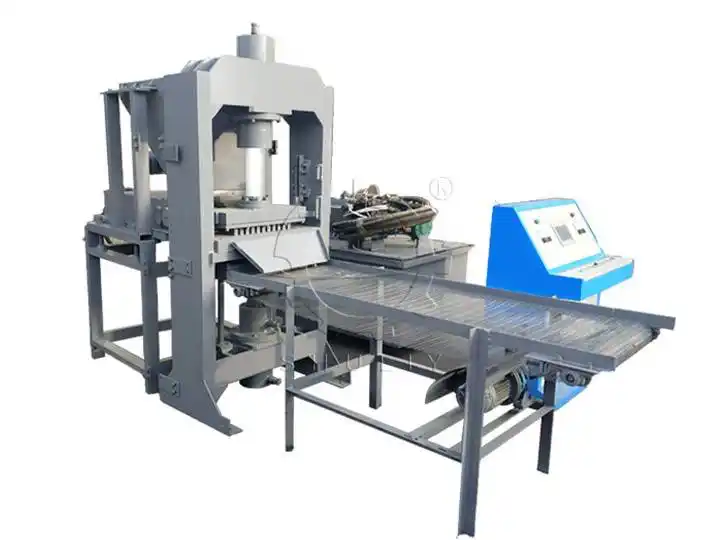
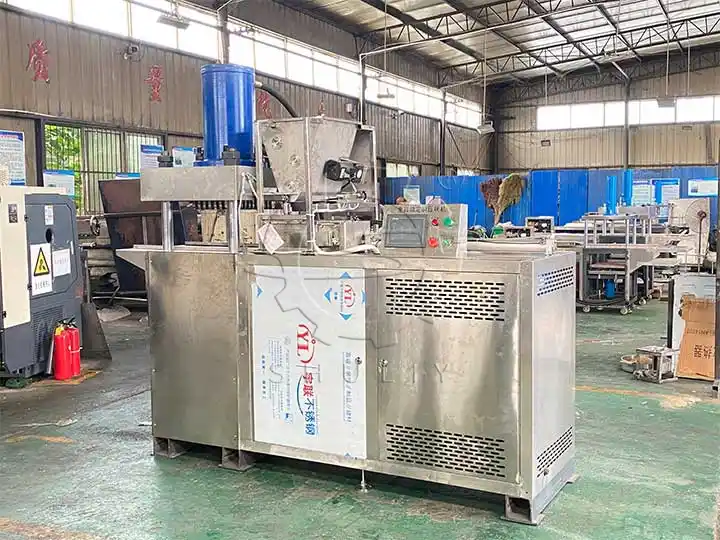
Rotary Tablet Press Shisha Charcoal Machine
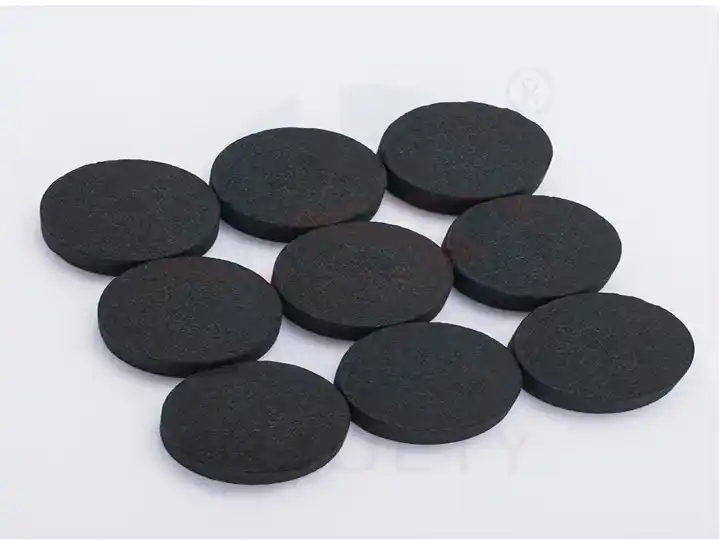
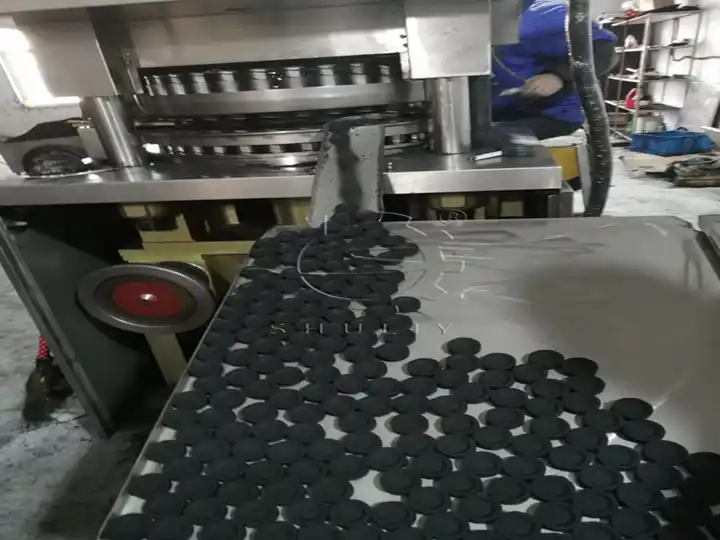
Engineered for mass production of quick-light or standard round hookah charcoal tablets, the rotary press offers continuous operation at high speed. Its turntable design feeds, compresses, and ejects briquettes in a single rotational cycle. This machine is ideal if your buyers require uniform 33 mm or 40 mm discs in bulk. The output speed—up to 21,000 pieces per hour—makes it a staple for manufacturers supplying supermarkets and distributor networks across the Gulf region.
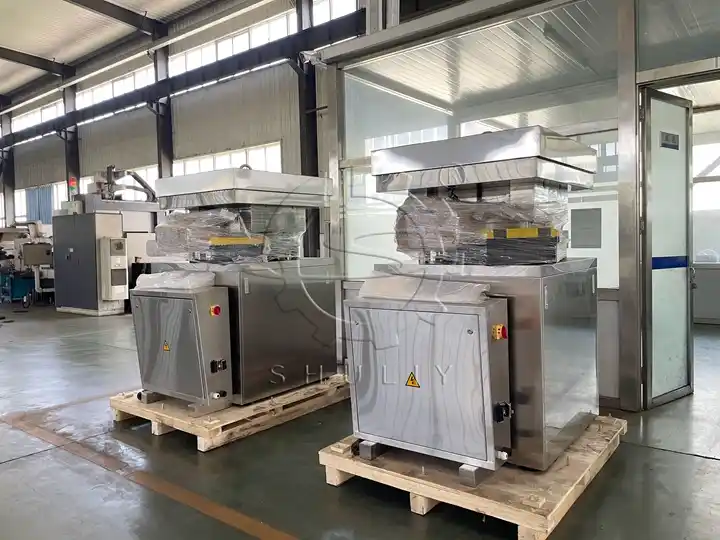
Stainless Steel Cube Shisha Charcoal Machine
For producers prioritizing corrosion resistance and hygienic finishing—especially important when using food-grade binders or coconut shell powder—a stainless steel cubic press delivers both durability and clean surface contact. It is frequently chosen by factories operating in humid climates where carbon steel frames degrade faster.
Evaluate Raw Material Consistency and Preparation
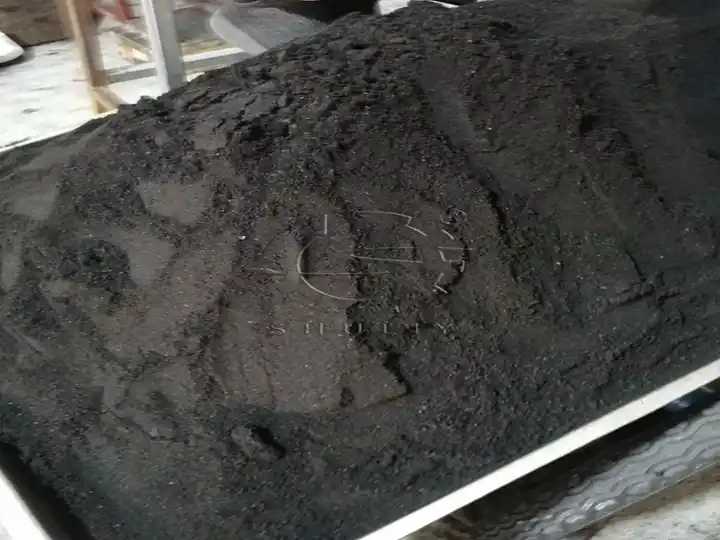
The performance of any shisha charcoal briquette making machine depends heavily on the quality of the feedstock. Coconut shell charcoal powder is the industry standard for premium hookah charcoal because it is odorless, low in ash, and burns at a stable temperature. However, if your supply chain includes mixed hardwood charcoal or fruitwood powders, you must verify that the machine’s feeding system can handle variations in particle size and moisture content.
- Moisture content should be controlled between 8% and 12% before pressing.
- Particle size typically needs to pass through a 60–80 mesh screen for uniform compression.
- Binder selection—whether cassava starch, corn starch, or synthetic binders—affects both the formulation mixer you need and the wear rate of the pressing molds.
If your raw material arrives unprocessed, budget for upstream equipment such as a carbonization furnace, charcoal grinder, and binder mixer. Running an incomplete line will bottleneck your press and reduce the effective return on your primary machine investment.
Calculate Floor Space, Labor, and Power Requirements
Production scale is not only about kilograms per hour. It is also about the physical and operational resources required to support that output.
| Factor | Small Hydraulic Press | เครื่องอัดเม็ดแบบโรตารี | Stainless Steel Cube Press |
|---|---|---|---|
| Footprint | ~2.1 m x 1.0 m | ~1.1 m x 0.84 m | ~2.0 m x 1.0 m |
| Power demand | 15–18.5 kW | 7.5 กิโลวัตต์ | 15–22 kW |
| Operator requirement | 1–2 workers | 1 worker | 1–2 workers |
| Cooling/drying space | Mesh conveyor + drying room | Collection tray + drying room | Mesh conveyor + drying room |
Factories in regions with unreliable electricity should consider whether the selected model can run on a generator or whether a diesel-compatible variant is available. Additionally, remember that pressed briquettes still contain moisture and must be dried before packaging. A dedicated shisha charcoal dryer or drying room with hot-air circulation will add to your spatial footprint but is non-negotiable for product stability.
Budget Beyond the Purchase Price
The invoice price of a shisha charcoal briquette making machine is only part of the total cost of ownership. Buyers operating on tight margins often overlook the following line items:
- Shipping and customs: Heavy industrial equipment incurs significant sea-freight charges and import duties depending on your country’s HS classification for briquetting machinery.
- Installation and commissioning: Some suppliers include remote guidance free of charge, while on-site technician dispatch may carry daily fees plus travel costs.
- Spare molds and wear parts: High-volume production wears pressing dies faster than expected. Keeping a backup mold set on hand prevents multi-day shutdowns.
- Packaging integration: If you plan to sell retail-ready boxes, factor in a charcoal briquettes packing machine that can match your press output without creating a downstream bottleneck.
A useful rule of thumb is to allocate 20–25 percent above the machine’s quoted price for these ancillary costs during your first year of operation.
After-Sales Support as a Selection Criterion
Downtime in a shisha charcoal workshop translates directly to lost revenue, especially when you have standing orders from distributors. When evaluating suppliers, ask specific questions:
- Is technical documentation provided in your local language?
- How quickly can replacement molds or hydraulic seals be shipped?
- Does the supplier offer video commissioning, or is on-site support available?
- What is the warranty period, and does it cover both electrical and mechanical components?
Experienced manufacturers with a track record of exports to your region are more likely to understand voltage standards, customs documentation, and the typical wear patterns that occur in your climate. That institutional knowledge can reduce your startup risk more than a marginal discount from an unproven vendor.
Decision Checklist Before Placing Your Order
Use the following checklist to confirm that your selected machine aligns with both current needs and future growth:
- I have confirmed my daily and peak-season production targets in kilograms or piece count.
- I have matched the machine type (hydraulic, rotary, or stainless steel cube) to the briquette shape and density my market demands.
- I have verified that my raw material particle size and moisture content meet the manufacturer’s feed specifications.
- I have accounted for floor space, electrical capacity, and drying infrastructure.
- I have obtained a clear quote that includes shipping, spare parts, and after-sales support terms.
- I have planned a 20–30% capacity buffer to accommodate future growth or seasonal spikes.
บทสรุป
Choosing the right เครื่องทำถ่านอัดก้อนชิชา is fundamentally an exercise in matching mechanical capability to commercial reality. Start with your numbers—daily output, product shape, and budget—and work backward to the machine type that satisfies those parameters without overextending your capital.
A hydraulic press suits dense cube production for premium export markets. A rotary tablet press answers the call for high-volume round disc manufacturing. And a stainless steel variant offers corrosion resistance where humidity or binder chemistry demands it.
If you need personalized guidance on capacity planning, mold selection, or full production line configuration, contact our team. We can recommend the specific model and auxiliary equipment that fit your workshop scale and market goals, along with detailed quotations and shipping schedules to your destination.