
Barisan Pengeluaran Arang
Wood Charcoal Making Production Line | Sawdust Charcoal Briquette Production Line
Barisan Pengeluaran Arang
Wood Charcoal Making Production Line | Sawdust Charcoal Briquette Production Line
Ciri Sepintas lalu
The barisan pengeluaran arang machine by our company offers a comprehensive solution for transforming wood, wood chips, or other plant-based raw materials into high-density sawdust charcoal briquettes.
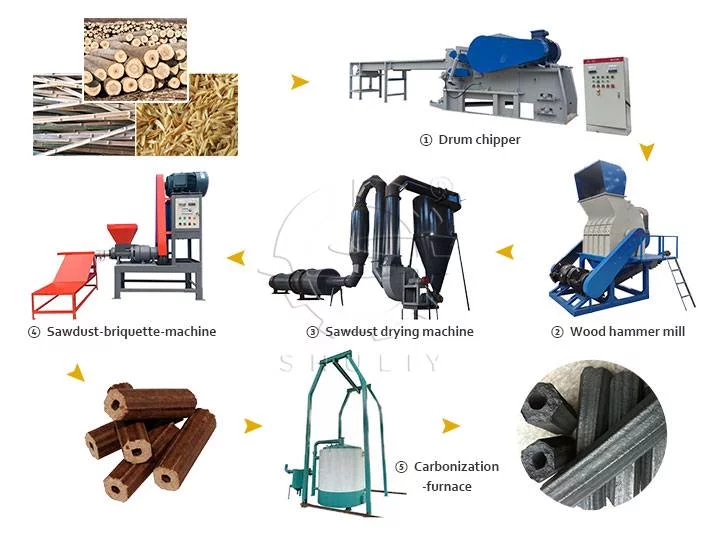
Our charcoal briquette production lines include processes such as crushing, mixing, molding, charring, and drying. We cater to various scales and processing needs. Configurations are available for 1-3t/d, 3-6t/d, dan 6-10t/d output capacities.
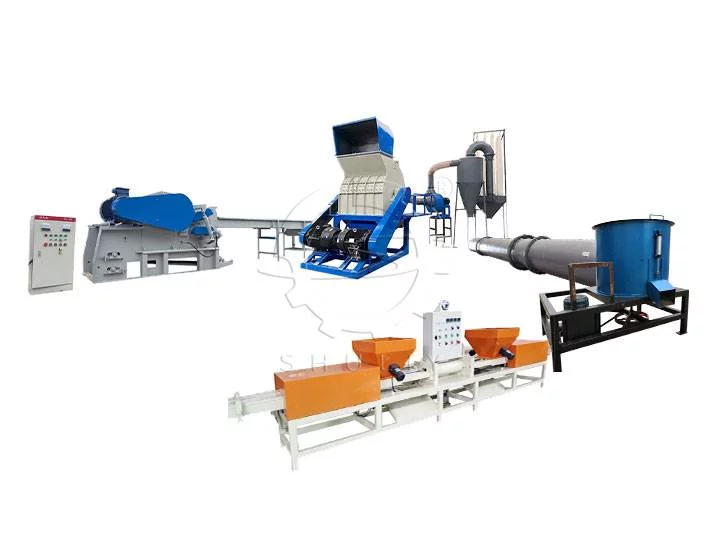
Each line is equipped with essential machinery such as wood shredders, hammer mills, dryers, sawdust briquette machines, and carbonization furnaces. These charcoal-making units ensure efficient production from raw material preparation to the final charcoal product.
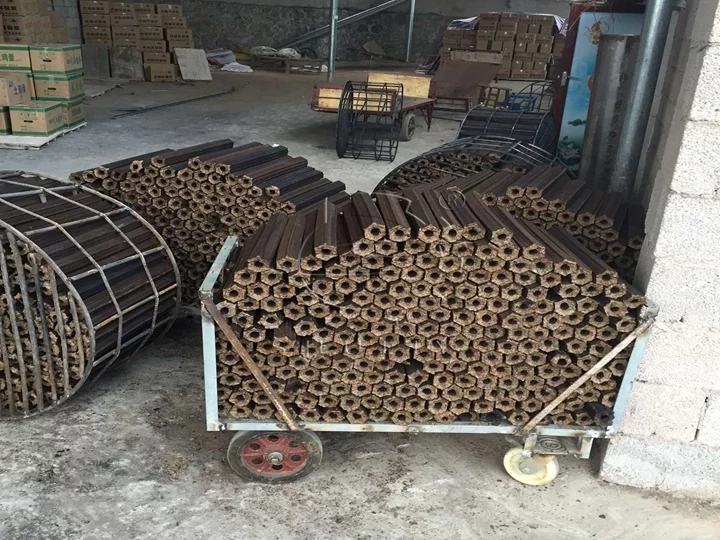
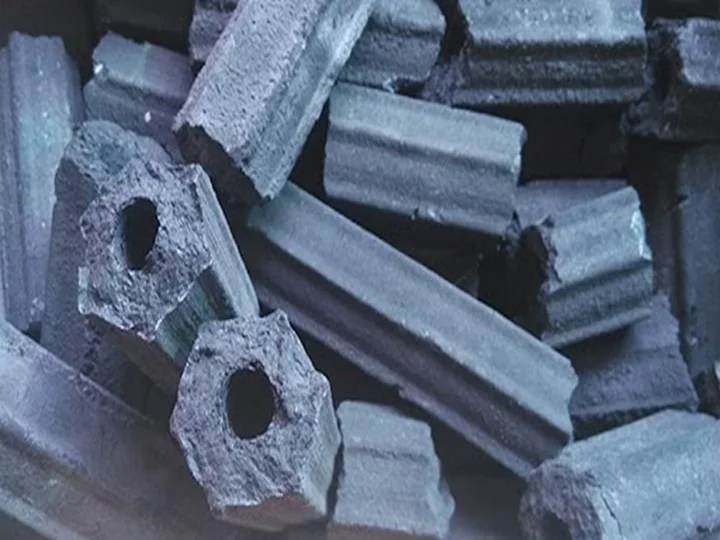
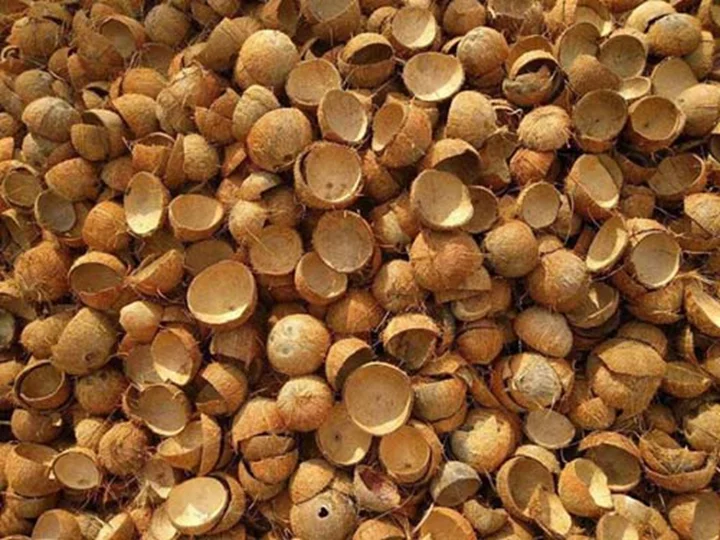
The line accepts wood waste with moisture below 40%. Raw materials include hardwood logs, branches, sawdust, bamboo, coconut shell, and fruit wood. The final product is high-density charcoal briquettes ready for barbecue, shisha, and industrial fuel markets.
Sebagai pakar dalam mesin arang biojisim, kami pakar dalam penyelesaian peralatan yang boleh disesuaikan yang memaksimumkan kecekapan. Produk arang kami yang boleh dipercayai sesuai untuk pelbagai aplikasi.
Raw Materials for the Charcoal Production Line
Memahami bahan mentah yang diperlukan untuk barisan pengeluaran arang adalah langkah pertama untuk berjaya beroperasi.
Barisan pengeluaran briket arang menggunakan bahan mentah yang pelbagai, biasanya termasuk kayu balak, buluh, biojisim, sisa pertanian dan tempurung kelapa. Setiap jenis biojisim menawarkan ciri dan pertimbangan yang unik.
Pilihan biojisim untuk pengeluaran arang bergantung pada faktor seperti ketersediaan tempatan, permintaan pasaran dan keperluan produk khusus untuk kilang pemprosesan anda.
Seterusnya, mari kita mendalami proses kerja barisan pengeluaran briket arang dan fahami spesifikasi setiap langkah.
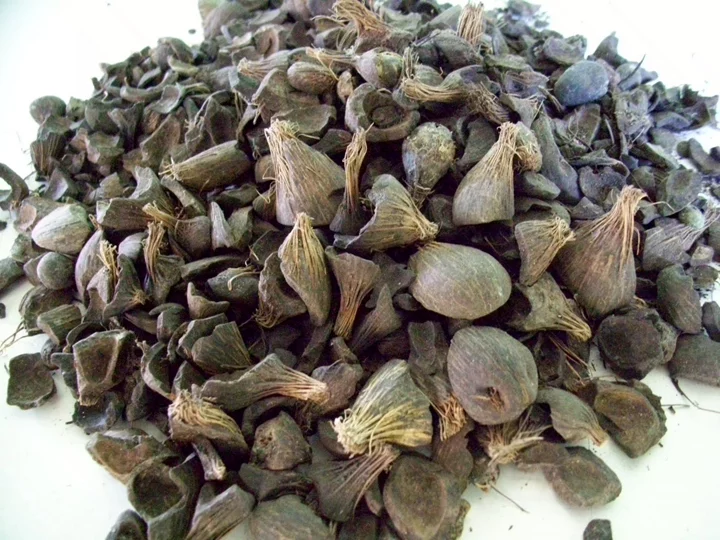
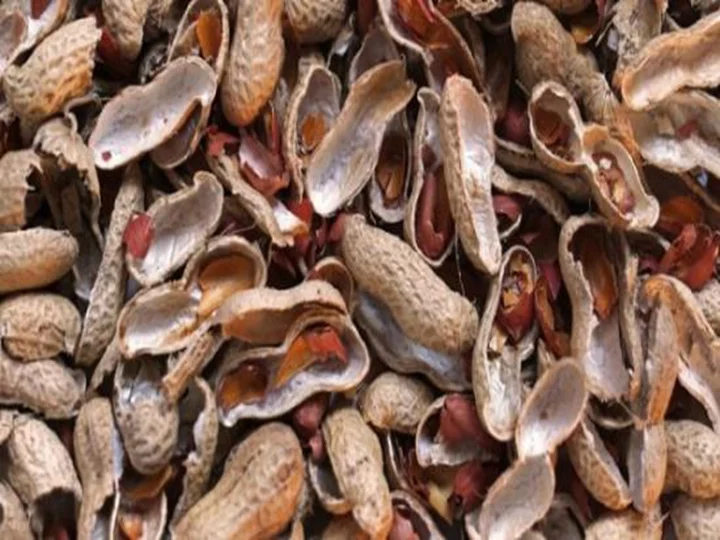
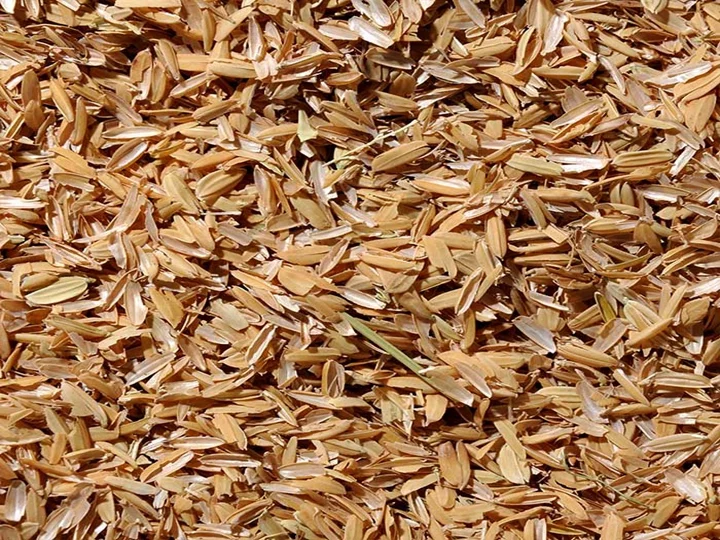
How the Charcoal Making Plant Works: 5-Stage Process
Stage 1: Crushing
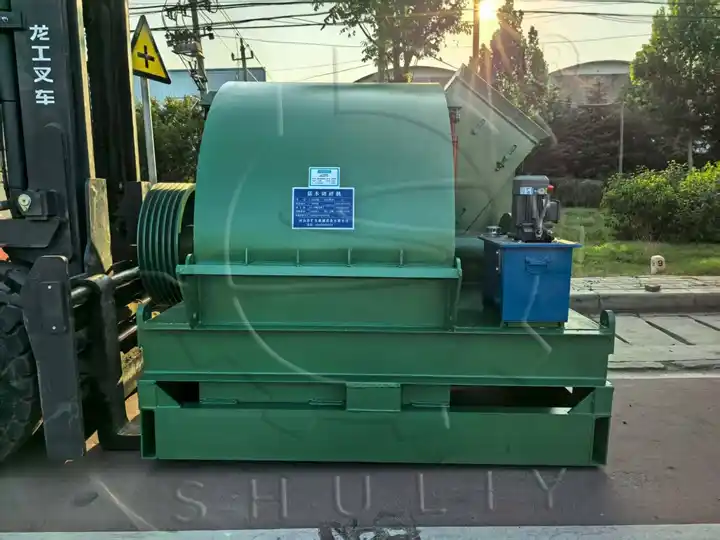
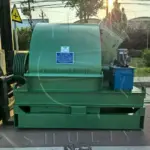
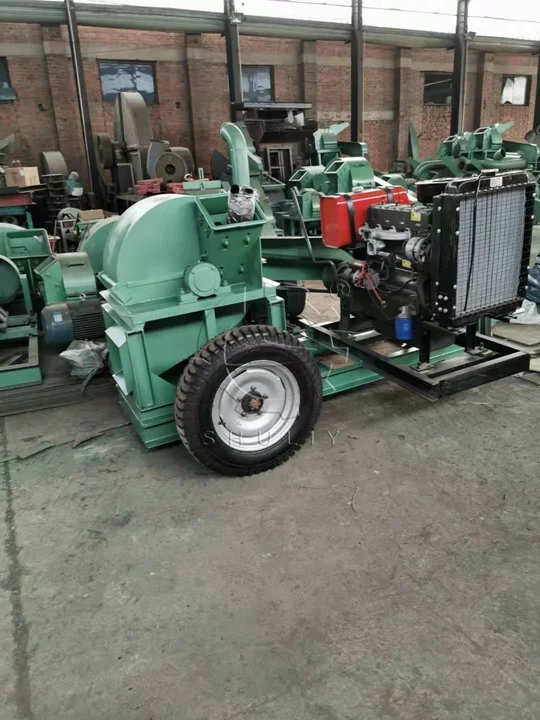
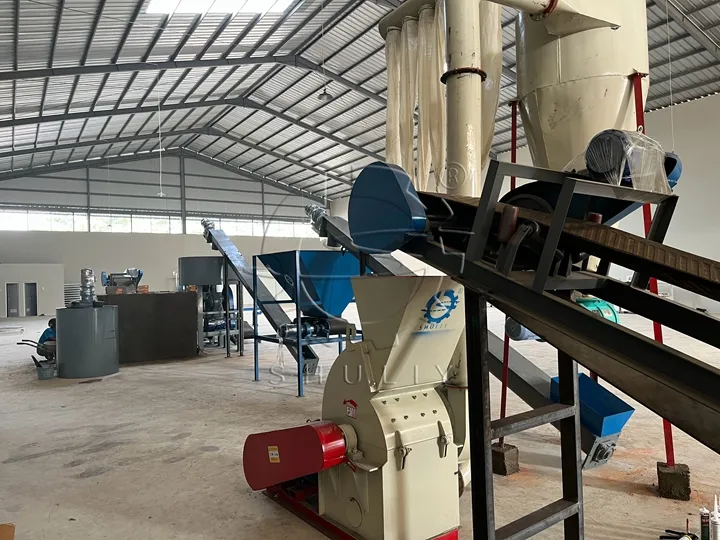
The SL-800 wood sawdust machine crushes logs, branches, and wood chips into fine sawdust. Capacity reaches 1,000 kg per hour. The 45 kW main motor drives alloy hammers against an internal screen. A 6-bag dust remover with 1,000 mm diameter keeps the workshop clean. Screen apertures from 0.6 mm to 12 mm control the final sawdust size.
Stage 2: Drying
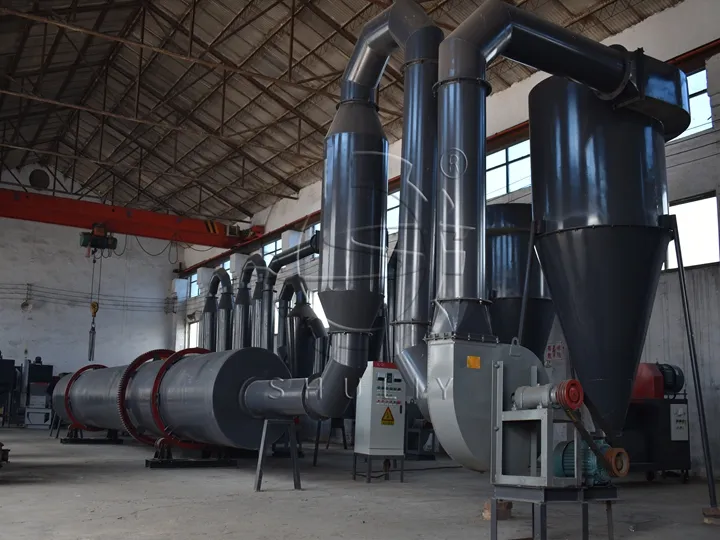
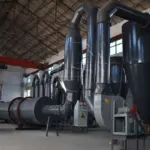
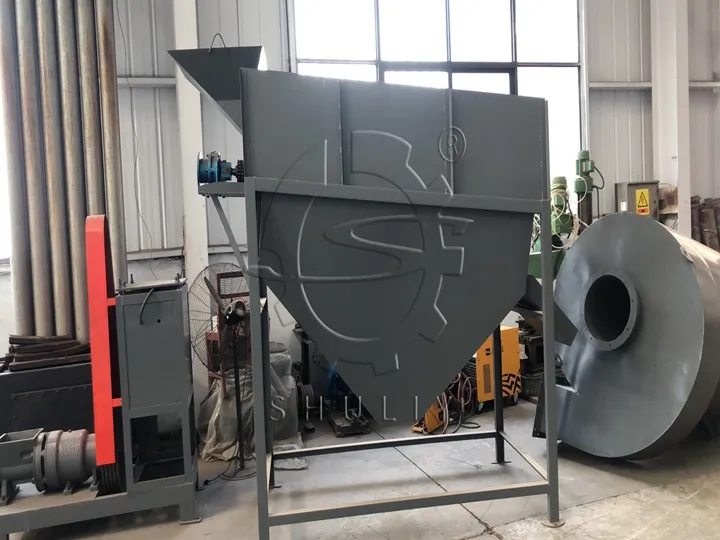
Wet sawdust cannot form strong briquettes. The SL-D1000 rotary drum dryer reduces moisture from 30–40% down to 8–12%. Capacity matches the crusher at 1,000 kg per hour. The dryer includes a cyclone dust collector, adjustable-speed motor, and independent control cabinet.
Stage 3: Briquetting
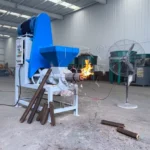
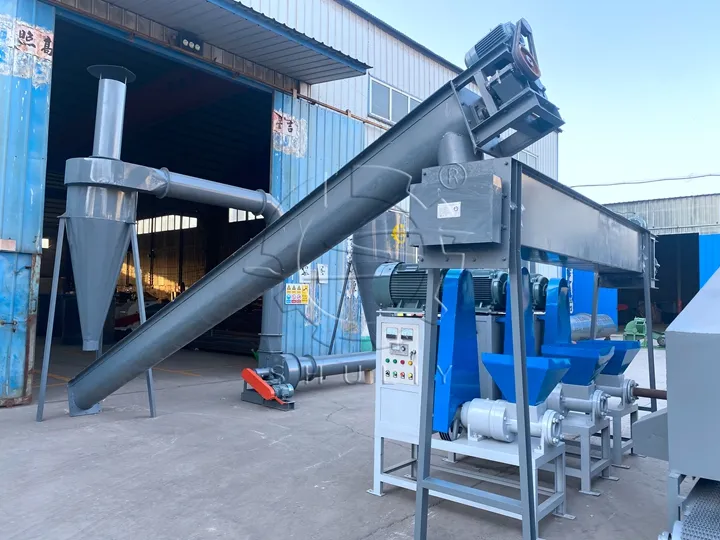
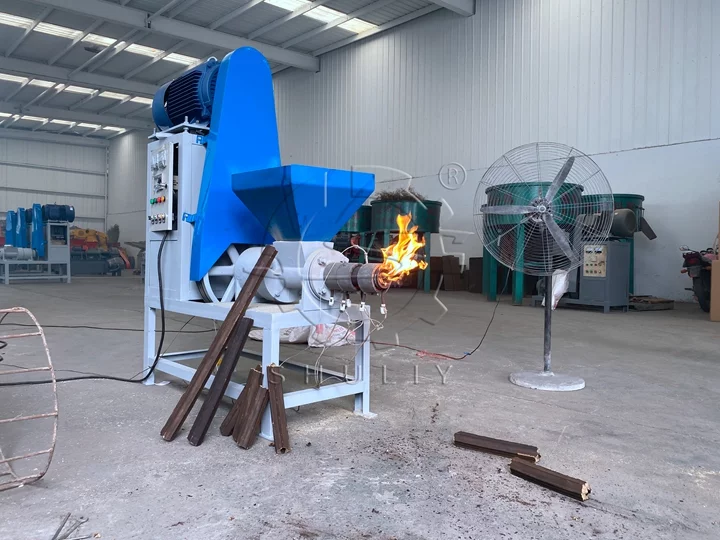
Dried sawdust enters the screw feeder. The feeder distributes material evenly to four SL-50 briquette machines. Each machine produces 200–250 kg of briquettes per hour. High-pressure screw extrusion compresses sawdust into dense rods without any binder. The machines use chromium-manganese alloy molds and C-type belts for longer service life.
Stage 4: Carbonization
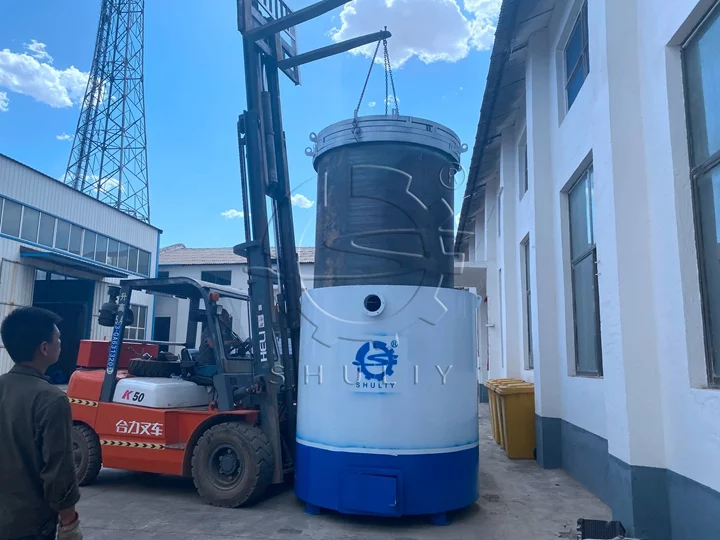
Biomass briquettes load into vertical carbonization furnaces. Each furnace processes one batch every 6–8 hours. After the first hour, combustible gases released from the briquettes sustain the furnace heat. No electricity or external fuel is required. Three furnaces working in rotation handle the daily output of the 1 ton/hour briquetting line.
Stage 5: Cooling and Packing
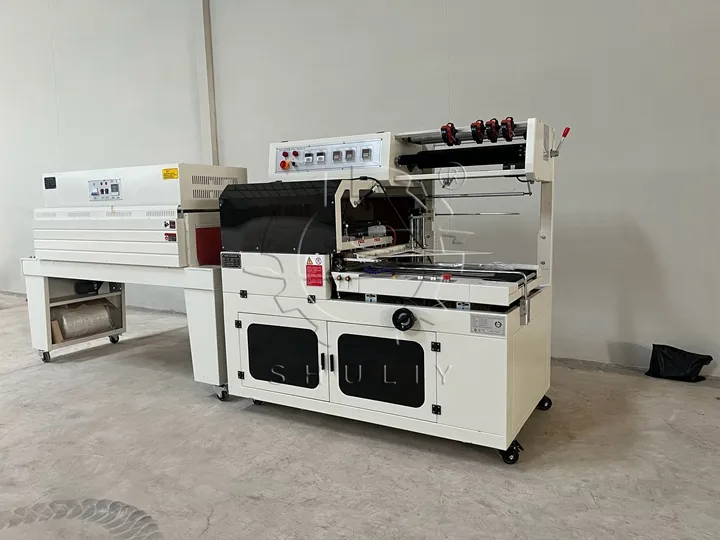
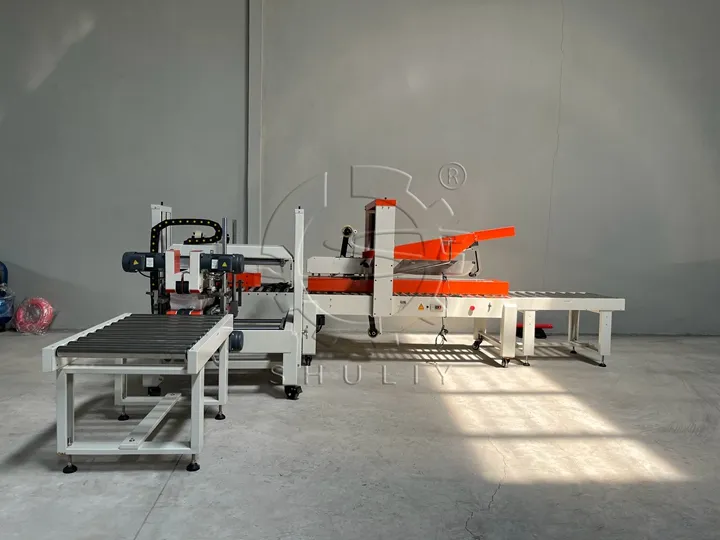
Hot charcoal cools inside the sealed inner stoves. Once at room temperature, the charcoal briquettes are ready for packaging and sale. The charcoal holds the briquette shape, density, and uniform size from the pressing stage.
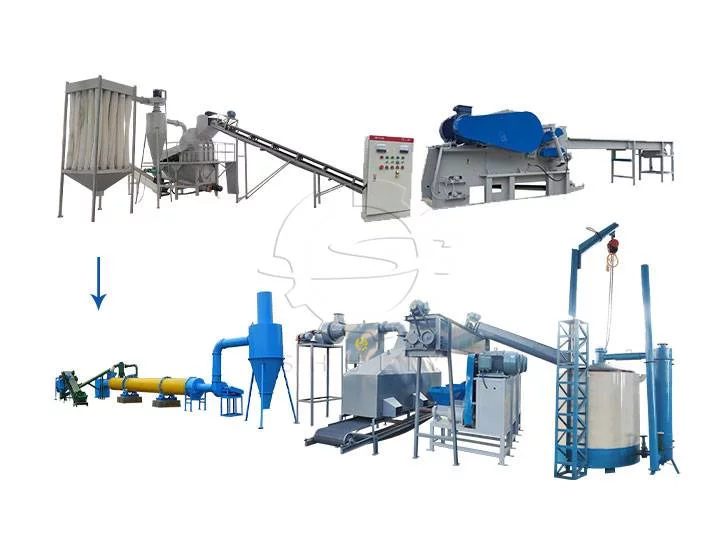
Charcoal Production Line Machine For Sale
Selepas memahami proses pengeluaran, anda mungkin berminat dengan peralatan yang diperlukan. Kami menawarkan pelbagai mesin untuk memenuhi keperluan yang berbeza.
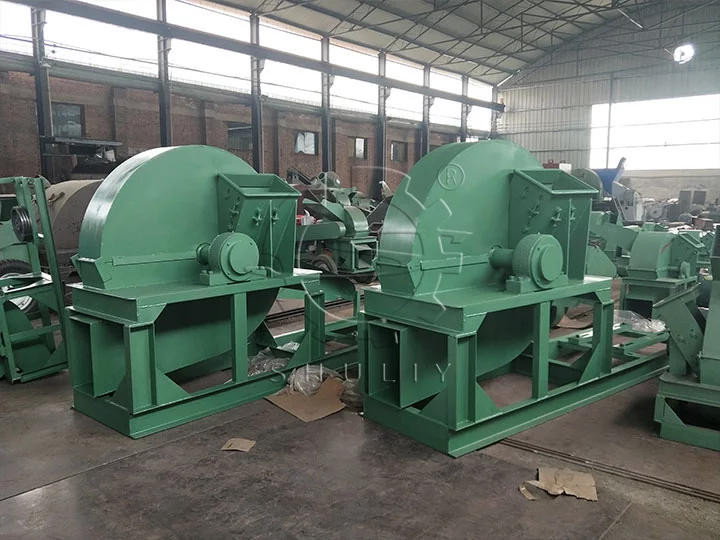
Mesin pencincang kayu digunakan untuk menghancurkan bahan mentah, seperti kayu balak atau dahan, menjadi zarah yang lebih kecil.
- Pencincangan yang cekap dan seragam, memastikan saiz bahan yang konsisten untuk pengkarbonan optimum.
- Operasi berkelajuan tinggi, menjimatkan masa dan meningkatkan kecekapan pengeluaran.
- Serbaguna untuk mengendalikan pelbagai jenis kayu dan bahan biojisim.
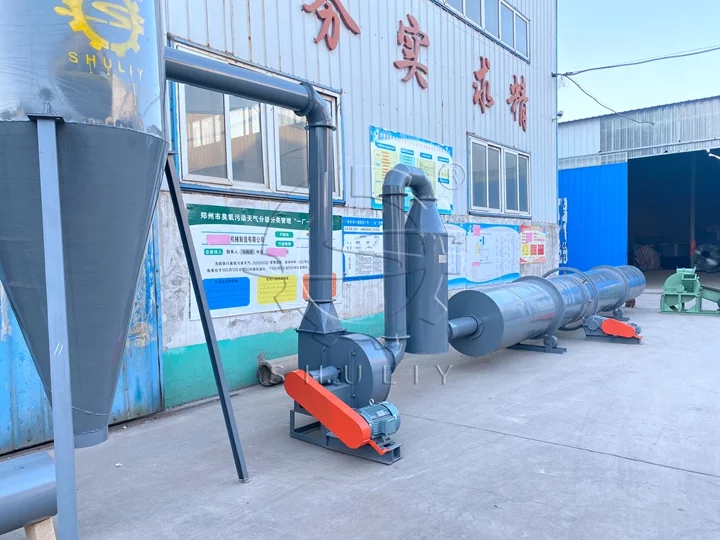
Pengering habuk papan bertanggungjawab untuk mengurangkan kandungan lembapan bahan mentah.
- Pengeringan yang cepat dan seragam, memastikan bahan mentah sesuai untuk briket dan pengkarbonan.
- Operasi cekap tenaga, mengurangkan kos pengeluaran.
- Suhu boleh laras dan masa pengeringan untuk kawalan kandungan lembapan yang tepat.
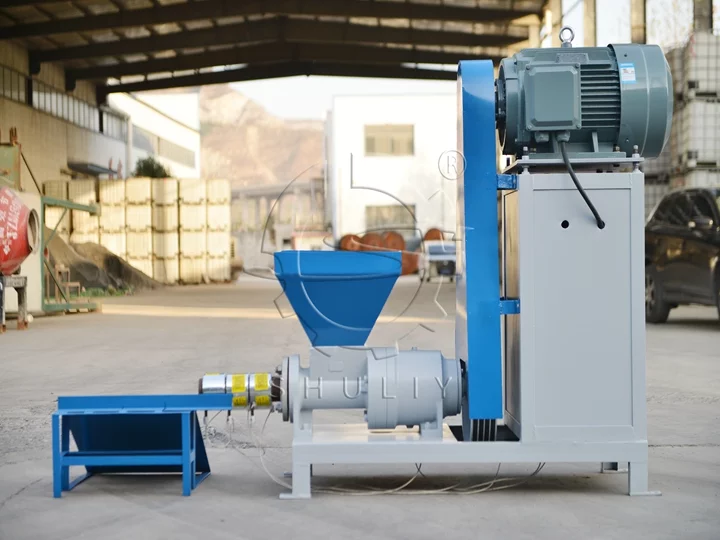
Mesin briket biojisim digunakan untuk memampatkan bahan mentah kering kepada briket bentuk yang dikehendaki.
- Pengeluaran briket yang konsisten dan seragam, memastikan kualiti produk.
- Tekanan dan ketumpatan tinggi semasa briket, menghasilkan briket yang padat dan tahan lama.
- Serbaguna untuk bekerja dengan pelbagai bahan biojisim, menawarkan fleksibiliti dalam pilihan produk.
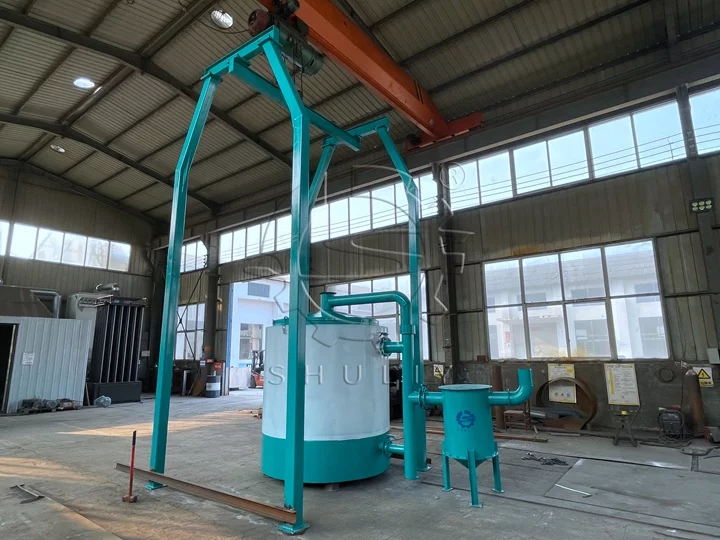
Relau pengkarbonan adalah peringkat akhir di mana briket ditukar kepada arang melalui proses pengkarbonan.
- Pemanasan terkawal dan kekurangan oksigen untuk pengkarbonan optimum.
- Penebat suhu tinggi, memastikan pengkarbonan yang cekap dan menyeluruh.
- Ciri keselamatan dan mekanisme kawalan pelepasan untuk mematuhi piawaian alam sekitar.
Charcoal Production Line Equipment List
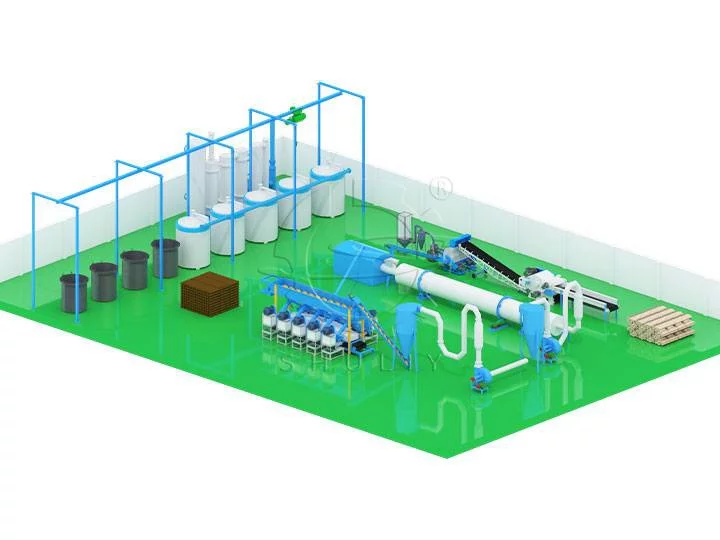
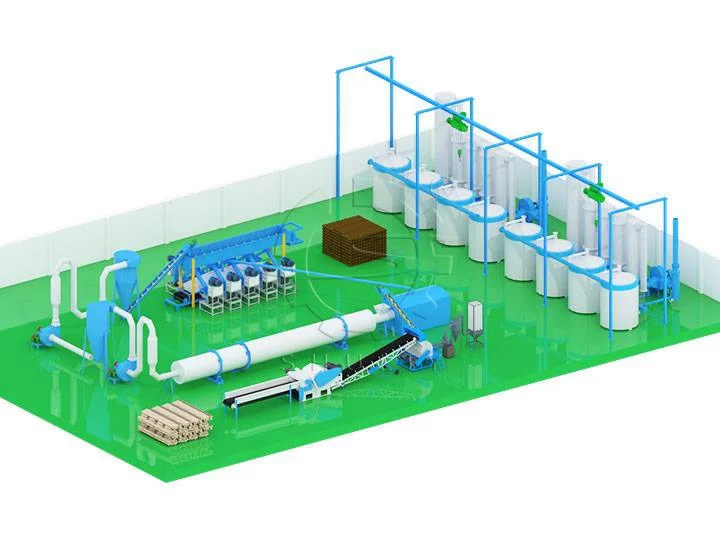
A complete 1 ton/hour charcoal production line includes the following machines:
| Peralatan | Fungsi | Kuasa (kW) |
|---|---|---|
| Wood sawdust machine (SL-800) | Crushes wood chips and logs into habuk papan | 45 + 7.5 |
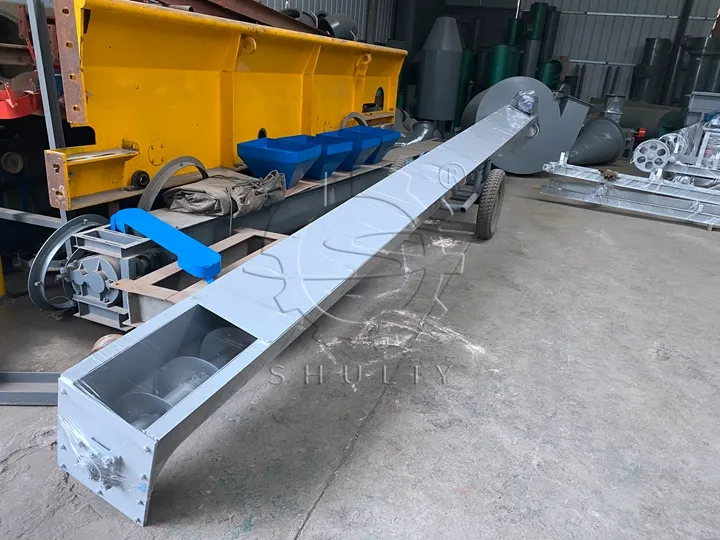
| Screw conveyor (6m) | Transports sawdust to the dryer | 4 |
| Rotary drum dryer (SL-D1000) | Reduces sawdust moisture to 8–12% | 3 + 15 |
| Screw conveyor (4m) | Transports dried sawdust to the feeder | 4 |
| Screw feeder (SL-4) | Distributes sawdust evenly to 4 briquette machines | 5.5 |
| Mesin briket habuk papan (SL-50) × 4 | Presses sawdust into biomass briquettes | 18.5 × 4 |
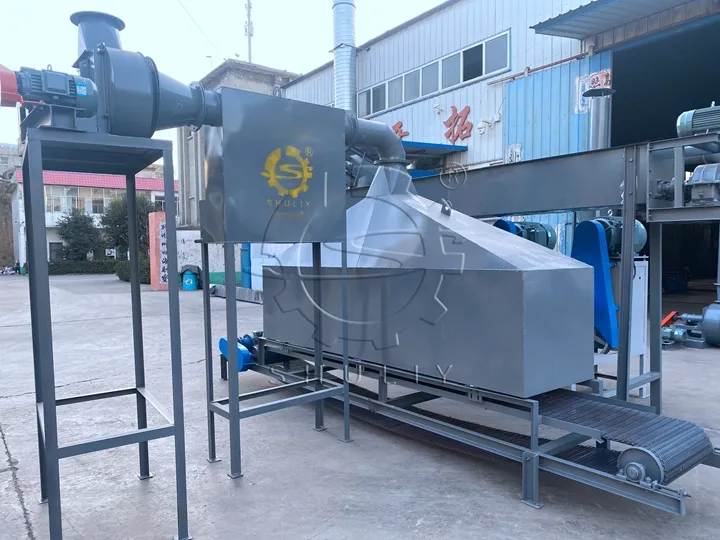
| Smoke collector (SL-4) | Collects and purifies smoke from briquetting | 4 |
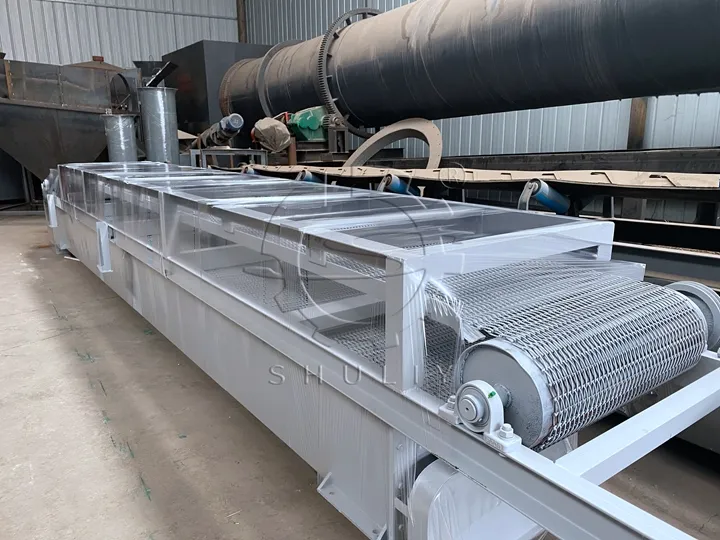
| Belt conveyor | Collects finished biomass briquettes | 1.5 |
| Vertical carbonization furnace × 3 | Carbonizes briquettes into charcoal | 0 (self-sustaining gas) |
- Total working area: 200–300 m².
- Total labor: 3–4 operators per shift.
- Total power (line excluding furnaces): 163.5 kW.
Advantages of The Charcoal Production Line
Wood Sawdust Machine (SL-800)
The crusher is the line’s front end. Its 45 kW copper-core motor handles logs and large branches. An optional large feed inlet accepts tree trunks directly. Spare hammers and screens ship with the machine. Keep hard metals and stones out of the feed opening to protect the blades.
Rotary Drum Dryer (SL-D1000)
The dryer’s 1,000 mm drum runs on 3 kW main power plus a 15 kW fan. Hot air flows through the rotating drum and carries moisture out. The adjustable-speed motor lets you slow the drum for very wet material.
Weight: 2,800 kg.
Sawdust Briquette Machine (SL-50) × 4
Each briquette machine runs on an 18.5 kW national-standard all-copper motor. Key design points:
- 100 cm bearing: more stable feeding and longer bearing life
- U-steel frame: resists deformation under continuous pressure
- Pre-welded screw angle: suits 90% of common raw materials out of the box
- Chromium-manganese alloy mold: extended mold life against abrasive sawdust
The four machines press at the same time. Even if one machine stops for maintenance, the other three keep producing.
Vertical Carbonization Furnace × 3
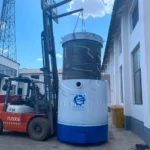
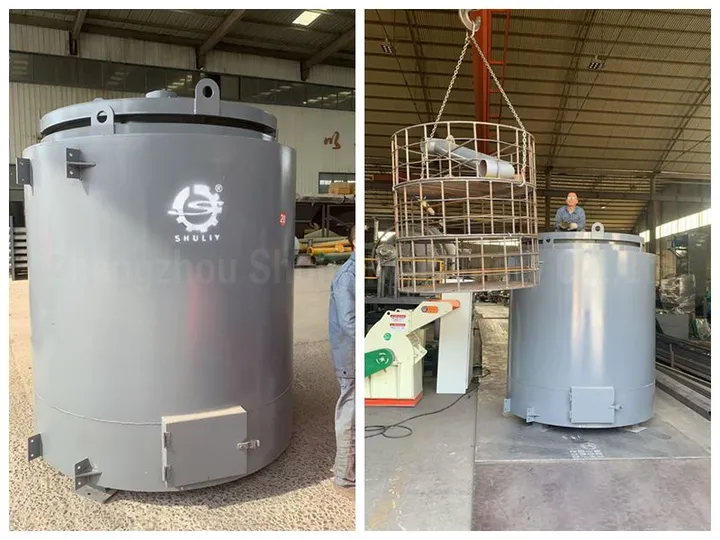
The vertical carbonization furnace is the final value-adding stage. Each furnace includes one outer body and three inner stoves. While one stove carbonizes, another cools, and a third loads. This rotation keeps production continuous.
Key parameters per furnace:
| Parameter | Value |
|---|---|
| Batch cycle | 6–8 hours |
| Daily capacity per furnace | 2.5–3 tons of charcoal |
| Inner stove loading | 2,600–3,000 kg per batch |
| Electricity required | None |
| External fuel after startup | 50–80 kg waste biomass per batch |
The sealed chamber produces uniform, low-smoke charcoal. Optional condensers recover wood vinegar and tar as sellable by-products.
Why Invest in This Charcoal Production Line?
- Briquettes sell for more than lump charcoal. Uniform shape, high density, and long burn time command premium prices in barbecue and export markets.
- No electricity for carbonization. The vertical furnaces recycle their own combustible gases. Your electricity bill only covers crushing, drying, and briquetting.
- Modular investment. Buy 1 briquette machine today, add 3 more when orders grow. No equipment becomes obsolete.
- Low labor demand. 3–4 workers run the entire 1 ton/hour line. Automated conveyors remove manual material handling between stages.
- Turnkey delivery. One supplier provides every machine, the layout drawing, and the wiring plan. No compatibility problems between equipment from different factories.
How to Set Up a Charcoal Processing Plant?
Menubuhkan kilang pemprosesan arang memerlukan perancangan yang teliti. Mulakan dengan penyelidikan pasaran dan rancangan perniagaan untuk memahami permintaan dan persaingan. Pilih lokasi berhampiran bahan mentah dan pengangkutan, dengan mengambil kira peraturan alam sekitar. Melabur dalam peralatan penting seperti mesin pencincang, pengering, relau pengkarbonan dan mesin pembungkusan.
Memastikan bekalan bahan mentah yang stabil dan menyelenggara peralatan dengan kerap. Mematuhi peraturan tempatan untuk operasi yang cekap dan mampan. Membangunkan strategi pemasaran dan mewujudkan saluran pengedaran. Latih kakitangan tentang pengendalian peralatan, kawalan kualiti dan keselamatan untuk tenaga kerja yang mahir dan cekap.
Sebaik sahaja kilang itu ditubuhkan, memahami aplikasi produk arang akan membantu anda mengembangkan pasaran dan saluran jualan anda.
Charcoal Production Line Application
- Pembuatan perindustrian. Digunakan oleh industri yang memerlukan arang untuk proses seperti metalurgi, pengeluaran kimia dan penjanaan tenaga.
- Pertanian dan perhutanan. Digunakan oleh petani dan operasi perhutanan untuk menukar sisa pertanian, sisa kayu dan biojisim kepada arang untuk dijual atau kegunaan peribadi.
- Penggunaan komersial. Digunakan oleh perusahaan komersial, seperti kilang pengeluaran arang dan pengilang, untuk menghasilkan produk arang untuk pengedaran runcit dan borong.
- Penyelesaian alam sekitar. Diguna pakai oleh organisasi dan inisiatif alam sekitar yang memberi tumpuan kepada amalan mampan dan pengurusan sisa, menggunakan sisa biojisim untuk pengeluaran arang untuk mengurangkan kesan alam sekitar.
- Sektor tenaga. Digunakan dalam sektor tenaga untuk menghasilkan arang sebagai sumber tenaga boleh diperbaharui, menyumbang kepada kebebasan tenaga dan mengurangkan pergantungan kepada bahan api fosil.
- Penyelidikan dan pembangunan. Digunakan di institusi penyelidikan dan universiti untuk mengkaji teknik pengeluaran arang, proses pengkarbonan, dan meneroka aplikasi baharu untuk arang.
Common Charcoal Production Problems and Solutions
Problem 1: Briquettes crack or break during carbonization.
- Cause: sawdust moisture was too high during pressing.
- Solution: hold dryer output moisture at 8–12% and let hot briquettes cool before loading the furnace.
Problem 2: Dryer cannot keep up with the crusher.
- Cause: raw material is too wet.
- Solution: pre-dry very wet wood in open air for 1–2 days, or reduce crusher feed rate until moisture balance stabilizes.
Problem 3: Briquette machine molds wear fast.
- Cause: sand or stone contamination in sawdust.
- Solution: screen raw material before crushing. Keep chromium-manganese alloy spare molds in stock.
Problem 4: Charcoal output is lower than briquette output.
- Cause: furnaces are the bottleneck.
- Solution: add one vertical carbonization furnace for every 2.5–3 tons of daily briquette production.
Why Choose Shuliy for Your Charcoal Making Plant?
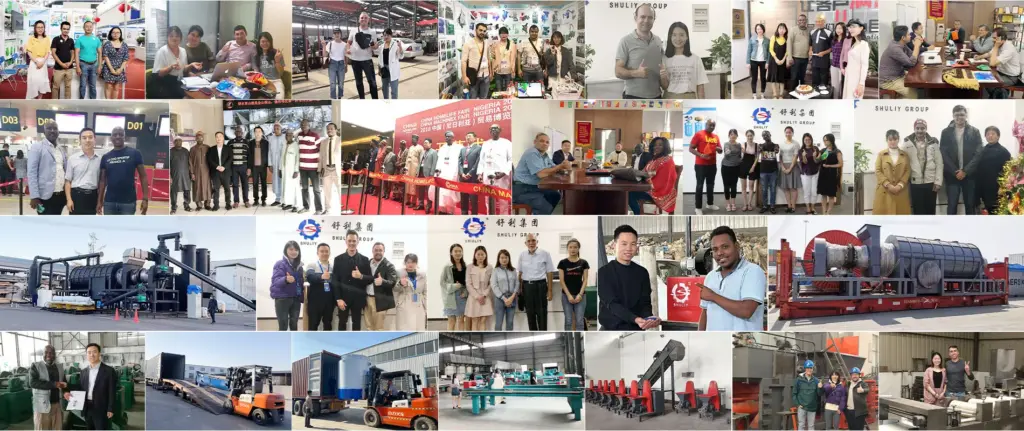
- Complete line from one factory. Shuliy manufactures the crusher, dryer, briquette machines, conveyors, and carbonization furnaces. Every machine is tested together before shipping.
- Layout design included. Send us your workshop dimensions. Our engineers provide a free 2D/3D layout showing machine positions, material flow, and operator stations.
- Wear parts in stock. Hammers, screens, screws, molds, and inner stoves ship within 48 hours. Your line never waits weeks for a spare part.
- 12-month warranty, lifetime support. Machine faults during the warranty period are our responsibility. Technical support continues for the equipment’s entire service life.
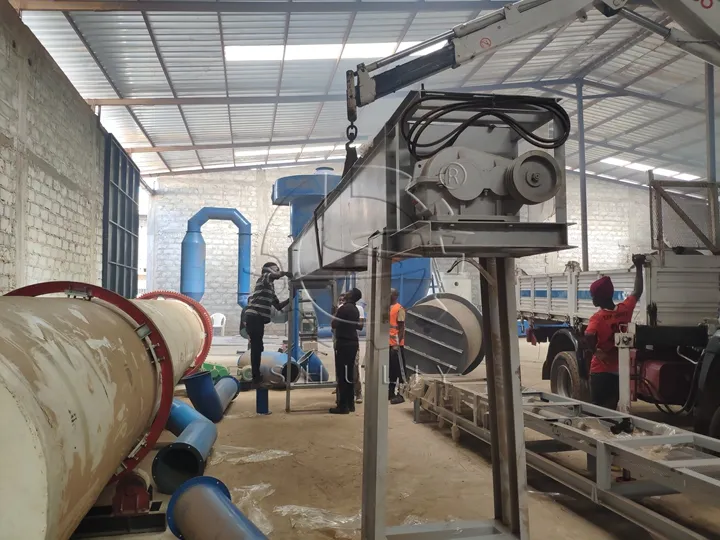
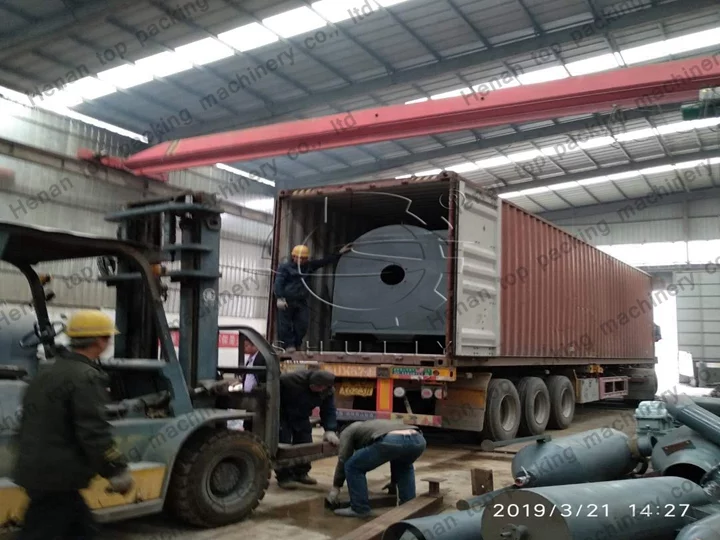
- Flexible installation options. Installation is simple enough for self-installation with our manuals and videos. On-site engineer teams are available for full commissioning and operator training.
Get a Custom Charcoal Production Line Quote
This charcoal production line turns wood waste into premium charcoal briquettes at 1 ton per hour. Tell us your raw material type, moisture content, and daily output target. Shuliy engineers will recommend the right number of briquette machines and carbonization furnaces, then send a detailed quotation with a layout drawing and shipping schedule within 24 hours.
Soalan Lazim
How much charcoal does 1 ton of briquettes produce after carbonization?
One ton of dried biomass briquettes yields approximately 700–800 kg of finished charcoal in the vertical furnace. The briquettes are already compressed and dried before carbonization, so the yield is much higher than carbonizing raw wood directly.
Can this charcoal production line process coconut shell?
Yes. Coconut shell crushes well in the SL-800 machine. However, coconut shell can also be carbonized directly in the vertical furnace without briquetting. Many buyers run both processes in the same plant.
What happens if my raw material moisture is above 40%?
Material above 40% moisture overloads the dryer and reduces line output. Store very wet material in a ventilated area for several days before processing, or add a second drying pass.
Can I start the line without the carbonization furnaces?
Yes. Some buyers sell raw biomass briquettes directly to carbonization plants or boiler fuel markets first. The furnaces can be added later when you are ready to move into higher-margin charcoal sales.
What power supply does the line need?
The line requires a three-phase industrial supply of approximately 165–180 kW capacity. The carbonization furnaces need no electrical connection. A diesel generator set can run the line in off-grid areas.
How long does installation take?
Self-installation with our drawings typically takes 5–7 days with 3–4 workers. An on-site Shuliy engineer team completes installation, commissioning, and operator training in approximately 3–4 days.
Mesin Pembuat Arang BBQ | Mesin Penekan Bebola Arang Batu
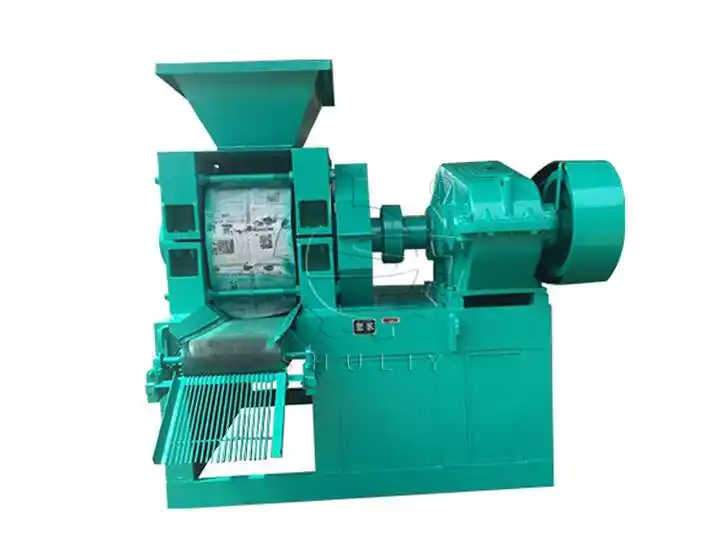
Mesin Pembuatan Arang Barbeku boleh menekan bahan serbuk, seperti…
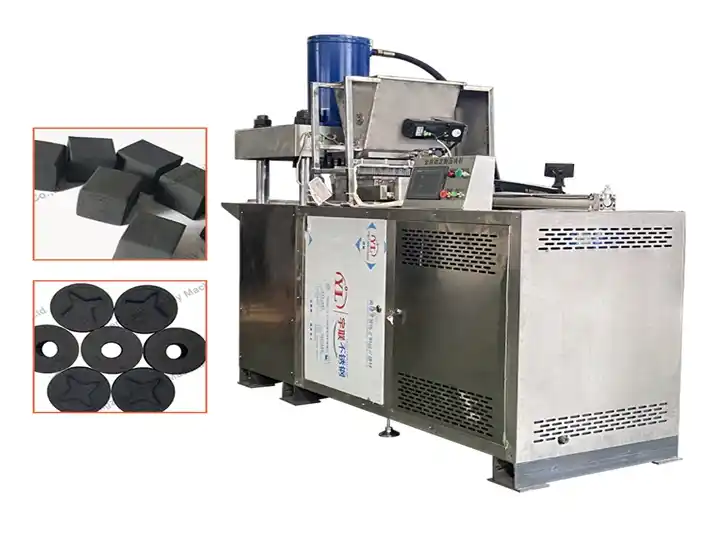
Mesin Arang Shisha untuk Arang Hookah Bulat & Kiub
Mesin Arang Shisha popular kami boleh menghasilkan arang shisha berkualiti tinggi…
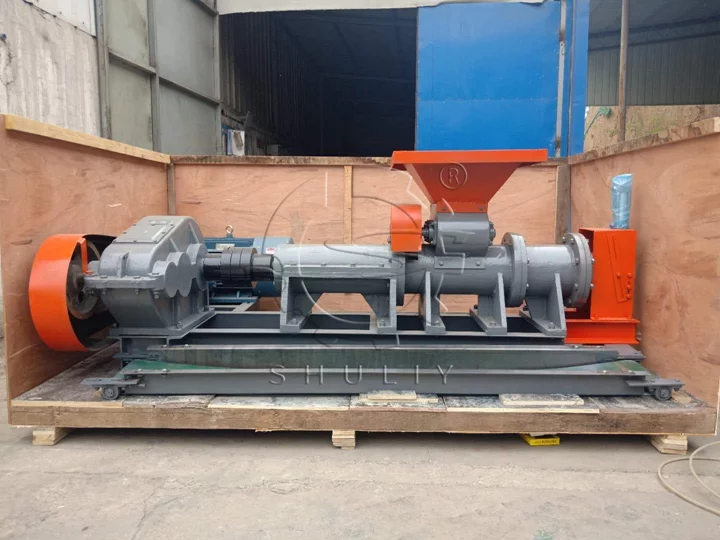
Mesin penekan briket arang dieksport ke Iraq
Baru-baru ini, mesin tekan arang arang batu arang kami telah berjaya dijual…
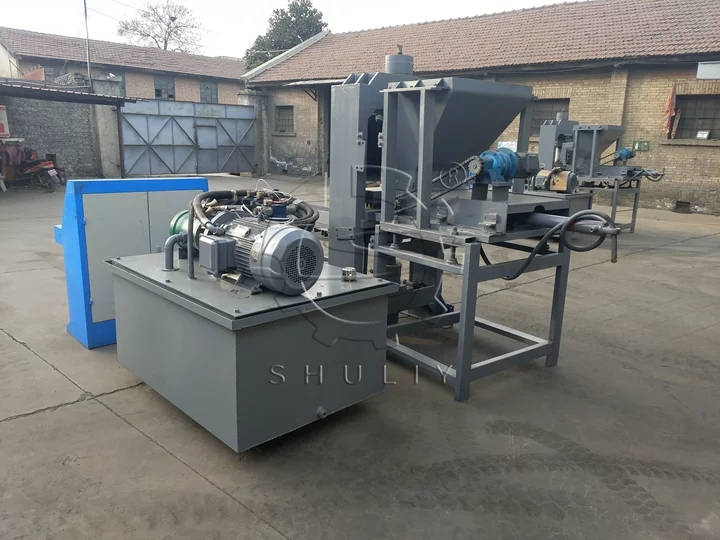
Mesin pembuat arang hookah dihantar ke Jakarta
Sebagai pembekal terkemuka mesin pembuatan arang hookah, kami…
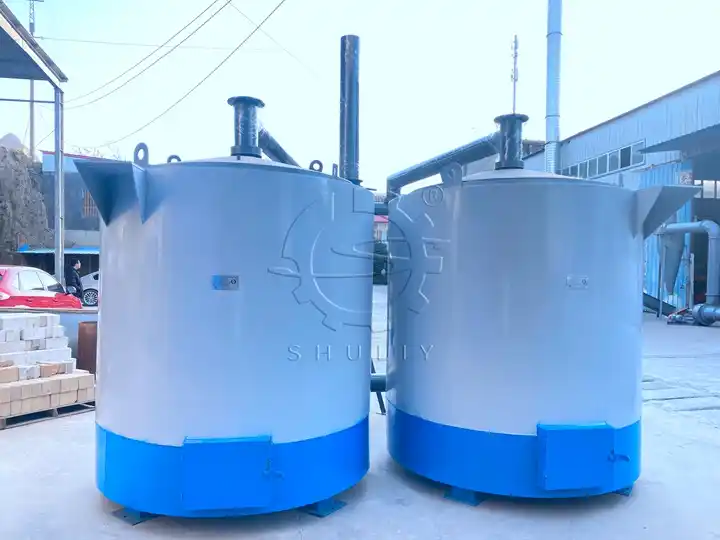
Dua furnace karbonisasi menegak dihantar ke Myanmar
Berita baik! Dapur karbonisasi menegak kami telah berjaya dihantar…
Produk Panas
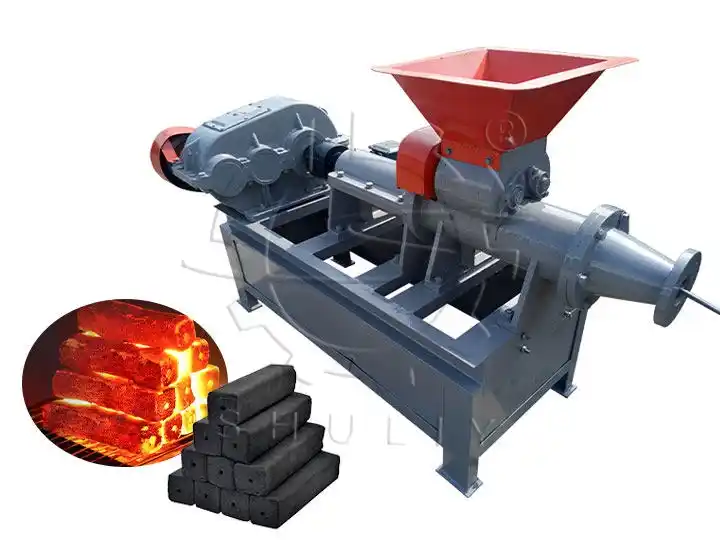
Mesin Briket Arang | Mesin Penyemperit Arang
Mesin briket arang, juga dikenali sebagai…
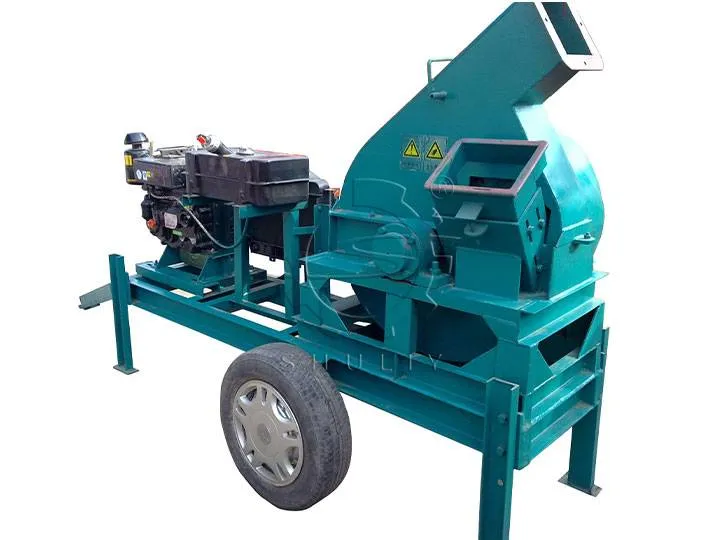
Pemotong Kayu Cakera | Mesin Pembuat Kerepek Kayu
Pemotong serbuk kayu cakera berdiri sebagai penyelesaian serba guna…

Activated Carbon Carbonization Furnace | Internal & External Heat Systems
An activated carbon carbonization furnace is a high-temperature…
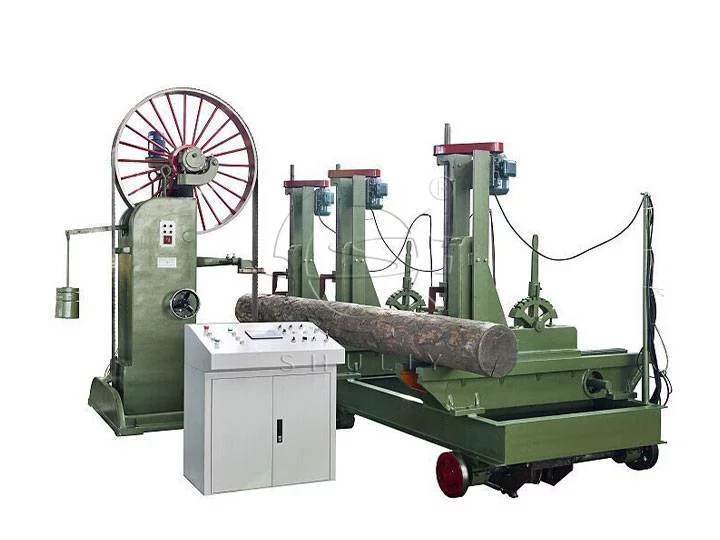
Mesin Gergaji Kayu Mudah Alih | Mesin Gergaji Kayu
Mesin kilang gergaji kayu mudah alih ini mempunyai kebolehan hebat…
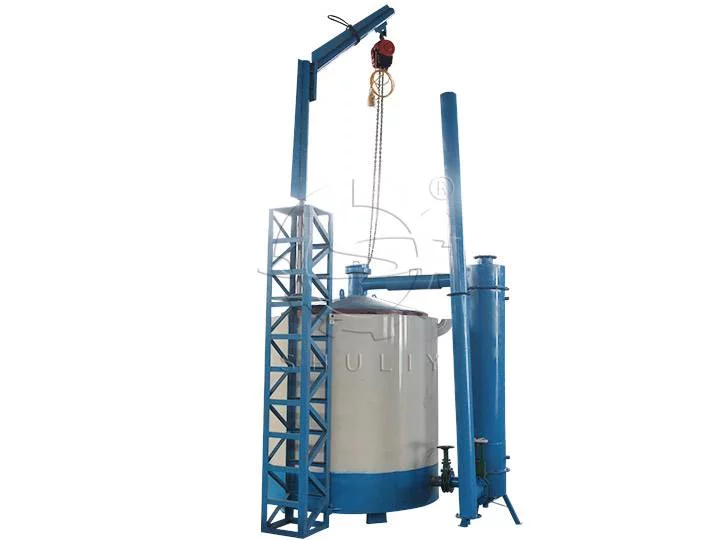
Relau Pengkarbonan Menegak untuk Pembuatan Arang Kayu Keras
Tungku karbonisasi menegak ini boleh digunakan untuk…
Mesin Arang Shisha untuk Arang Hookah Bulat & Kiub
Mesin Arang Shisha popular kami boleh menghasilkan arang berkualiti tinggi…
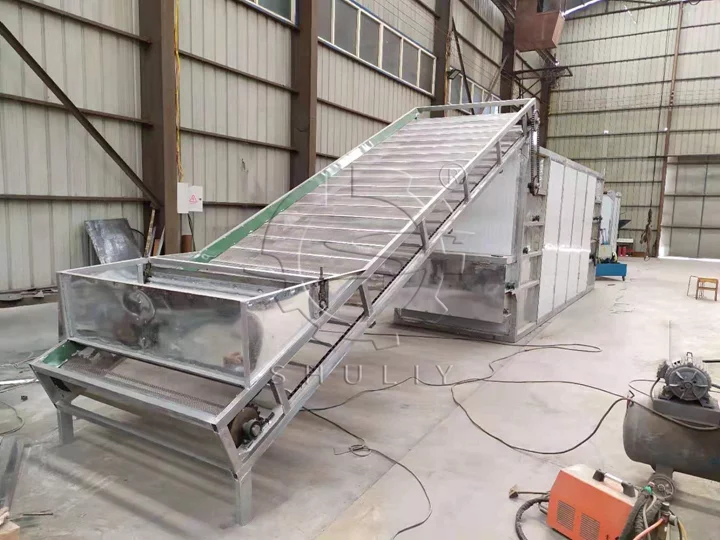
Pengering Tali Pinggang Mesh untuk Briket Arang
Pengering tali jaring, juga dikenali sebagai…
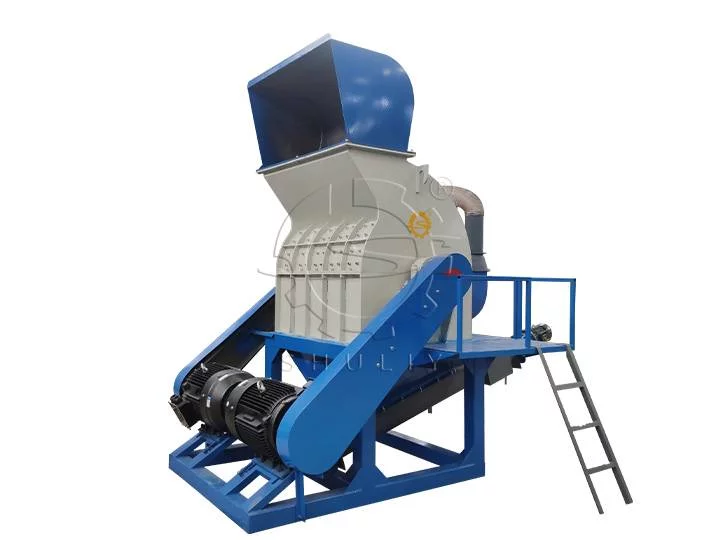
Kilang Tukul Kayu | Pencincang Kilang Tukul
Kilangan Tukul Kayu menghancurkan kepingan kayu dengan cekap,…
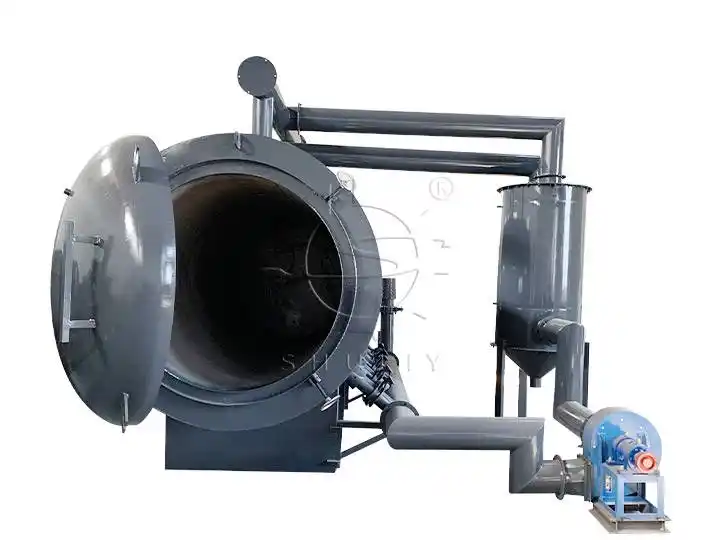
Relau Arang Mendatar untuk Menghasilkan Biochar
Ketuhar Arang Mendatar adalah peralatan berprestasi tinggi…