
What Is a Euro Pallet (EPAL Pallet)?
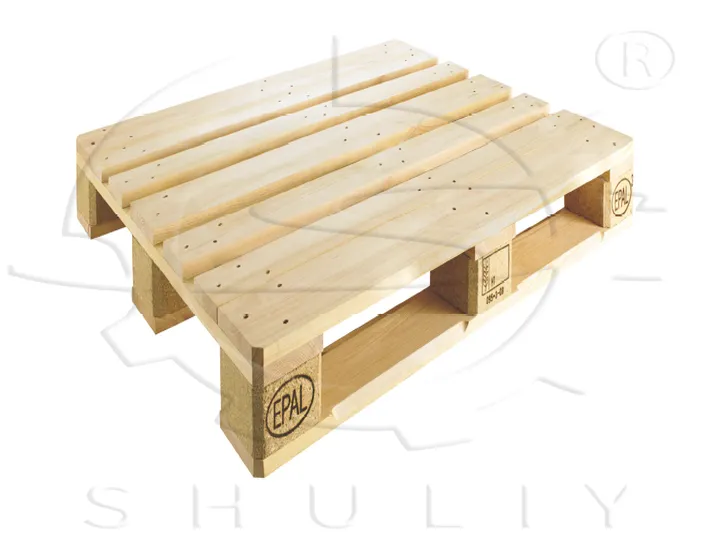
A Euro pallet—officially known as an EPAL pallet—is a standardized four-way entry platform used for transporting and storing goods across Europe and beyond. Measuring 1200 mm × 800 mm × 144 mm, the EUR-1 format is the most widely recognized specification in global logistics. Governed by the European Pallet Association (EPAL), these pallets must meet strict dimensional, material, and load-bearing standards to earn certification.
If you operate a warehouse, export goods to the EU, or run a logistics business, understanding what makes a genuine Euro pallet matters. Non-certified imitations can be rejected at customs, damage automated handling systems, or collapse under rated loads—costing far more than the price difference of authentic units.
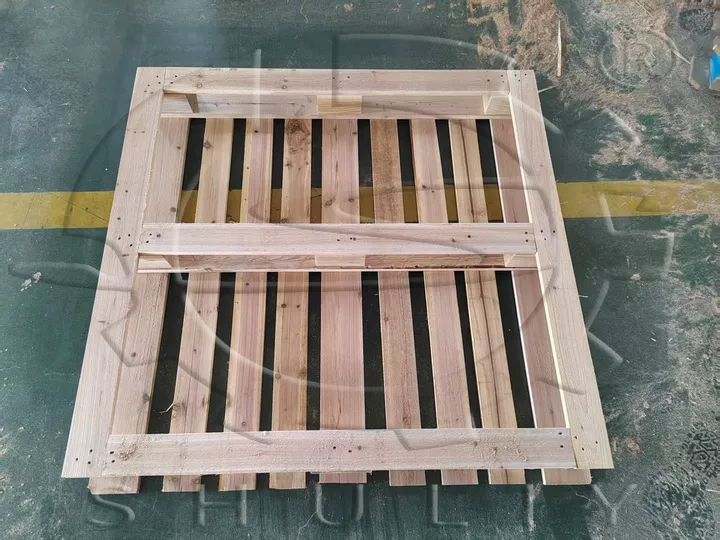
Why Euro Pallets Became the Global Standard?
The Euro pallet standard emerged in the 1960s when European railways and freight operators needed interchangeable loading platforms. Before standardization, every country—and often every company—used different sizes. This created inefficiencies at every transfer point: trucks, trains, ships, and warehouses all needed custom handling adjustments.
Today, over 500 million EPAL pallets circulate worldwide. Their dominance rests on three pillars:
- Dimensional uniformity: Every EUR-1 pallet is 1200 × 800 mm. This predictability allows automated warehouses, conveyor systems, and racking layouts to be designed without accommodation for variation.
- Four-way forklift entry: Forks can engage from all four sides, reducing handling time in tight loading bays.
- Verified load ratings: Certified dynamic capacity of 1,500–2,000 kg and static stacking capacity of 4,000–6,000 kg give logistics planners confidence in safety margins.
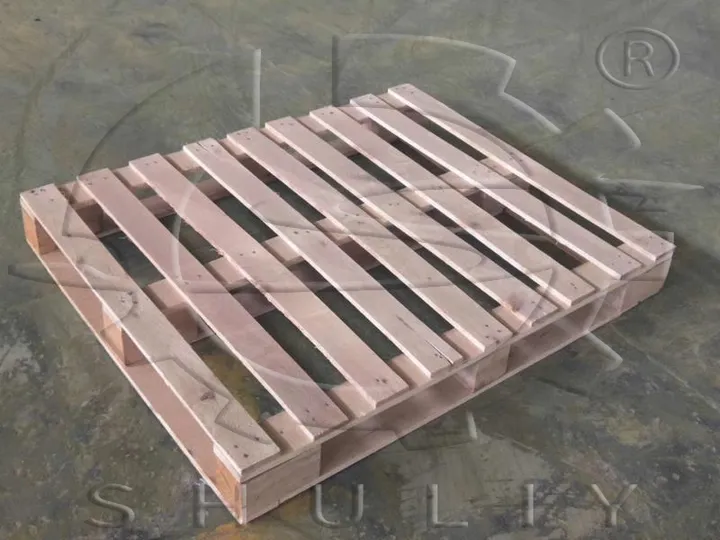
Anatomy of an EPAL Euro Pallet
A standard EUR-1 pallet is not simply nailed boards. Its construction follows a precise bill of materials:
| Component | Quantity | Specification |
|---|---|---|
| Top deck boards (narrow) | 5 | 1200 × 100 × 22 mm |
| Top deck boards (wide) | 2 | 1200 × 145 × 22 mm |
| Bottom deck boards | 3 | 1200 × 100 × 22 mm |
| Stringers (longitudinal beams) | 3 | 800 × 145 × 22 mm |
| Blocks (corner and center) | 9 | 145 × 100 × 78 mm |
| Fasteners | 78 | Helal nails, minimum 58 mm and 80 mm lengths |
Key structural features:
- Chamfered corners: All four corners receive a 45° bevel so forklift tines slide in smoothly without snagging.
- Nail pattern: Nails are arranged in specific zones. Longer fasteners (80 mm) secure deck boards over blocks; shorter fasteners (58 mm) join boards in open spans.
- ISPM-15 marking: For international shipment, pallets must display the IPPC stamp confirming heat treatment or fumigation to prevent pest transmission.
EPAL Certification-What It Means and Why It Matters
Not every 1200 × 800 mm wooden platform is a Euro pallet. EPAL certification requires:
- Licensed production: Manufacturers must hold an EPAL license and submit to unannounced audits.
- Approved timber: Only specific softwood species (pine, spruce) meeting moisture and grade standards.
- Verified construction: Nail count, placement, and depth checked against EPAL technical drawings.
- Repair standards: Even repaired pallets must follow EPAL guidelines—replacement boards must be identical in dimension and material to originals.
Using uncertified pallets risks container rejection at EU ports, liability for cargo damage, and incompatibility with automated material handling systems designed around true Euro dimensions.
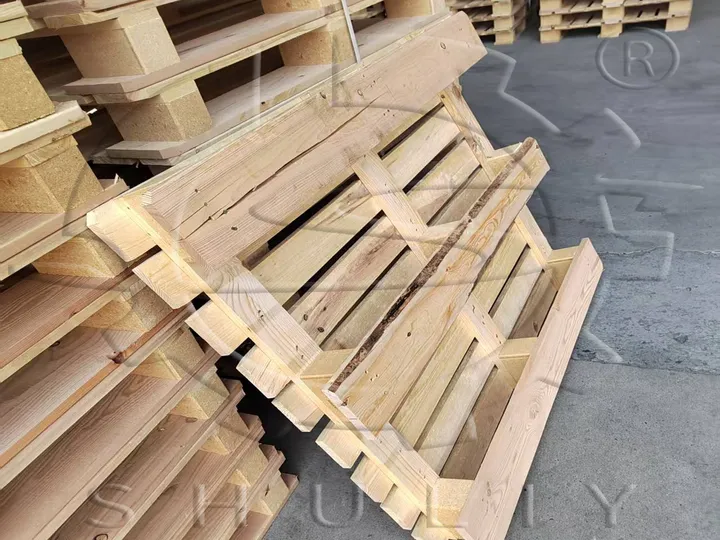
Common Euro Pallet Sizes and Their Uses
While EUR-1 dominates, EPAL recognizes multiple formats for specific applications:
| Format | Dimensions | Best For |
|---|---|---|
| EUR-1 | 1200 × 800 mm | Universal; grocery, retail, general logistics |
| EUR-2 | 1200 × 1000 mm | Bulk goods; UK, Dutch, and Finnish distribution |
| EUR-3 | 1000 × 1200 mm | Industrial loads; alternative to EUR-2 |
| EUR-6 | 800 × 600 mm | Parcel post, retail display, half-loads |
How Are Euro Pallets Manufactured?
The production of certified Euro pallets follows a tightly controlled sequence. Understanding this process helps buyers evaluate supplier quality and helps entrepreneurs plan manufacturing investments.
Step 1: Raw Material Preparation
Solid pine or spruce boards are inspected for knots, cracks, and moisture content. Boards exceeding 22% moisture are rejected or redried to prevent warping.
Step 2: Precision Cutting
A CNC cut-off saw trims boards to exact lengths for deck boards, stringers, and blocks. Tolerance is typically ±2 mm.
Step 3: Block Preparation
Timber blocks are cut, chamfered, and sometimes pre-drilled to guide fasteners.
Step 4: Base Assembly (Leg Nailing)
Blocks are fastened to the three bottom stringers using pneumatic nailers. This pre-assembly ensures the nine-block foundation is square before top boards are added.
Step 5: Top Deck Nailing
The main nailing machine secures five narrow and two wide deck boards to the base. Mixed fastener lengths are used: 80 mm nails over blocks, 58 mm nails in open spans.
Step 6: Branding and Marking
A hydraulic press embosses EPAL, EUR, and ISPM-15 marks into the side stringers. Dies are customized to each licensed manufacturer’s registration number.
Step 7: Corner Chamfering
All four corners are cut to 45° to enable smooth forklift entry from any direction.
Step 8: Stacking and Dispatch
Finished pallets are flipped to uniform orientation, stacked in layers, and banded for transport.
Entering Euro Pallet Manufacturing: What Equipment You Need
If you are considering producing EPAL-certified pallets commercially, the investment centers on a wooden pallet production line configured for solid timber assembly. Unlike compressed pallet plants that mold sawdust under heat and pressure, Euro pallet manufacturing relies on precision cutting, automated nailing, and strict dimensional control.
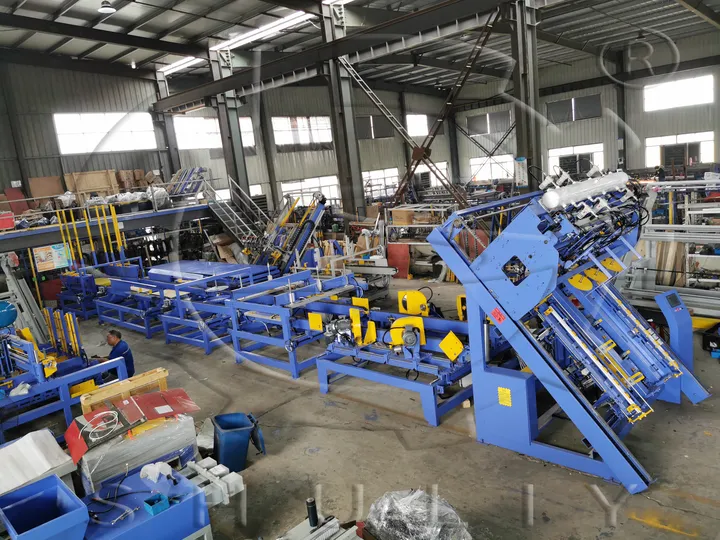
A complete Euro pallet manufacturing line typically includes:
| Machine | Function |
|---|---|
| CNC Timber Cut-off Saw | Precision board cutting to EPAL lengths |
| Block Nailer | Pre-assembles nine-block base frames |
| Main Pallet Nailing Machine | Fastens top deck boards with mixed-length nails |
| Pallet Rotary Machine | Orients pallets for side operations |
| EPAL Pallet Branding Machine | Embosses EPAL/EUR/ISPM-15 marks |
| Corner Chamfering Machine | Cuts 45° bevels on all four corners |
| Flip Station | Uniform stacking orientation |
| Automatic Stacker | Layers finished pallets for banding |
| Buffer Platform | Holds completed stacks before dispatch |
Shuliy Machinery supplies integrated solid wood pallet production systems engineered for EPAL compliance. Our lines handle EUR-1, EUR-2, and half-size formats with changeover times under 15 minutes.
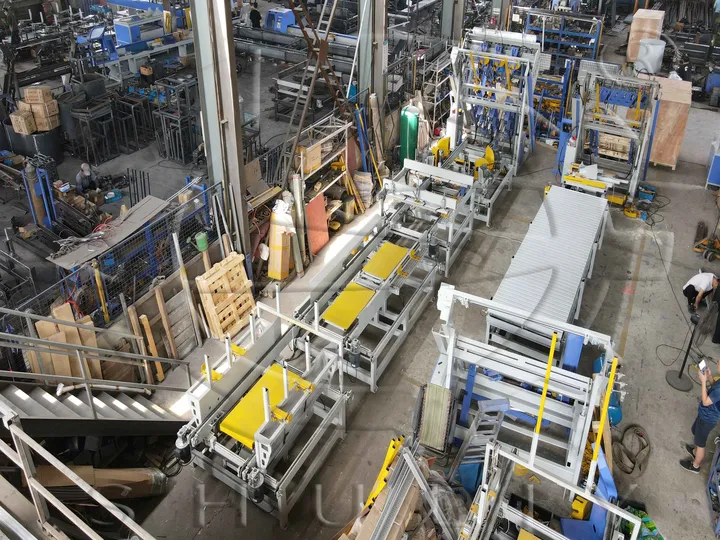
Key specifications include:
- Capacity: 800–1,200 pallets per shift (depending on automation level)
- Labor: As low as one operator for material loading in fully automated configuration
- Footprint: Approximately 15 m line length × 3 m width
- Power: 380V three-phase, 60–80 kW total
- Certification support: Guidance on EPAL licensing and ISPM-15 heat-treatment integration
For a detailed breakdown of each machine, technical parameters, and facility requirements, see our complete guide to the Wooden Pallet Production Line for EPAL Euro Pallets.
Euro Pallet vs. Compressed Pallet: Which Should You Produce?
Entrepreneurs often ask whether to invest in solid wood Euro pallets or compressed molded pallets. The answer depends on your target market:
| Factor | Euro Pallet (Solid Wood) | Compressed Pallet |
|---|---|---|
| Raw material | Solid pine/spruce boards | Sawdust, wood chips, recycled fiber |
| Load capacity | Higher (up to 2,000 kg dynamic) | Lower (typically 1,000–1,500 kg) |
| Repairability | Individual boards replaceable | Damaged pallet must be discarded |
| EPAL certification | Directly eligible | Not eligible for EPAL marking |
| Export to EU | Preferred for looped pooling systems | Accepted for one-way shipment |
| Initial investment | Higher (timber processing equipment) | Lower (molding press and dryer) |
If your customers are European distributors, grocery chains, or automotive suppliers participating in pallet pooling systems, solid wood Euro pallets are the required format. For one-way export shipments where cost minimization matters, compressed pallets may suffice.
Conclusion
The Euro pallet is far more than a wooden platform. It is a precision-engineered logistics tool governed by strict standards that ensure safety, compatibility, and efficiency across global supply chains. Whether you are a buyer sourcing certified pallets or an entrepreneur evaluating manufacturing equipment, understanding EPAL requirements protects your investment and opens access to the world’s largest pallet pooling network.
If you are ready to enter Euro pallet production, Shuliy Machinery offers turnkey wooden pallet manufacturing systems with EPAL-compliant tooling, installation support, and operator training. Contact our team for equipment specifications, layout drawings, and licensing guidance.